Almost two years ago, just a few days before the winter solstice, I was mucking out the sheep shed at one of the farms I worked for when I received news via a text message that I was going to be hired as a co-Director at a small nonprofit focused on building the local food system. This came at the end of a lengthy interview process, after weeks of build up, and at a point at which I had already decided I was ready to move on and try a new type of work. I loved the farms I worked for, but I wanted a change.
That desire at the time was something of a revelation for me. I had been working those same farms for a few years at that point, and was in my fifth year of farm work in general. Over the preceding several years, I had studied and become a part of the local food movement, working on and in the ground and loving it dearly. My first experiences with farm work in the summer of 2009 changed me and altered my life’s course. As I continued along that path, I came to love the idea of staying in one place, learning it, and figuring out how to live well there. I reached for that even as I moved to Whidbey Island to farm, back to Portland to farm, out to the north Oregon coast to farm. However, I found something important out on the coast: a place to settle and live. Yes, I continued to move, a mile or two south along the same rural highway each year. But I settled into my work on a few familiar farms, came to know and love the land and climate around me even if I kept playing on different small plots, and initiated the long process of integrating and settling into the community I had become a part of.
To my mind, farming and working with the land was a key element of that process. It was the linchpin upon which the rest of my life—my place within my community—depended. Therefore, when I decided to pursue this new position in late 2014—this work that would take me away from the soil and from the growing and raising of food—it took me somewhat by surprise. As I pursued the job and began to internalize the idea of actually being hired, I became ready for it. A desire for a change in my work arose, and I came to the realization that I was done with my current work.
The realization confused and in some ways disconcerted me. It was a rejection of so many ways I had come to see myself in the world and it was the way I had integrated myself into my community. It was my context. Yet I didn’t try to avoid or ignore the realization, instead turning it over in my head, examining it, and wondering what it meant for the rest of my life. Honestly, it didn’t take me long to come to a simple conclusion, which was that I feed on a certain amount of change and diversity in my work, and possibly in other areas of life.
There are caveats to this idea, though. I crave comfort just as much as change and diversity, and I am a great fan of familiarity. I do not constantly ache for adventure. I like travel, but I can in many ways take it or leave it. I want a home, and I want to make that home day in and day out—that’s ultimately more important to me than travel. I still want to know a plot of land intimately. I enjoy seeing the changes in a certain place as it cycles through the season, I enjoy knowing my way around a place, and I revel in the return to familiar places. All this is true. And yet, I have worked six different regular jobs in the last seven years, I’ve lived in seven different places, I’ve engaged in a number of side projects, and I keep changing parts of my identify and concept of self.
By early 2015, I no longer worked for any farms and I was settling deep into an office job, still working within the context of the local food system but via a nonprofit organization rather than through the direct growing and raising of food (though I still had my garden and chickens). The change felt monumental and I look back on it now as a key turning point in my life, setting me on a new path that led to my current relationship and my recent return to living in Portland. Yes, I am back in the city now, and sometimes my farming life feels so far away that I no longer know what to make of it, or what to make of myself, even though many of the ways I view and understand the world and much of what I have written about here at Of The Hands during my farming life is still an integral part of who I am. It’s just that my context is different.
That isn’t bad, of course; I am happy and content, in my way, although I keep thinking that there’s another shift coming. But that, too, is part of the equation now of who I am. I shift, and try new things, and embark on new courses. I’ve been doing that for over a decade now, and I don’t think I’m quite done.
The thing is, I still think I may be done at some future point. I don’t mean that literally, of course—change is a constant in life, and I’m far too interested in the world and its intricacies to ever settle into a single world view, a single way of being, a single overarching experience without wanting something new and revelatory. But I also don’t expect to keep this pace of change alive forever—at least not in my work and home. It still feels as though I’m working toward something more solid and steady, where the changes still exist but are far less disruptive, more internal, not as manifest at the physical level.
I don’t know. That may all be imagination, romanticism, or longing for a person I no longer am or perhaps never was. I always seem capable of taking myself by surprise, and thus it’s dangerous for me to make predictions.
Sometimes it’s tiring, this change and uncertainty, and sometimes it’s exhilarating and other times it’s confusing. There are things I do know, however: that I love the woman I am with now and the home we’ve made together, that I miss farming and working in the soil, that I miss living in a rural area, that I enjoy the city anyway, that I am excited by my recent turn toward writing, and that I’ll inevitably strike out in new directions in the future and learn new things—about me, about the world, about my community.
In that vein, I want to introduce you all to my new blog, Litterfall. It is a piece of my new life—perhaps something you’ve already found, perhaps not. If not, I’d like to invite you over, all of you who have ever read and enjoyed Of The Hands. I think you’ll like it over there, for there are many echoing themes, even if the general thrust is different. Of The Hands is about philosophies of living, of course, but it’s as much or more about my experiences with farming and homesteading, with connection to nature, with growing and raising food and eating it, with finding my place within a specific community. Litterfall is more philosophical, more broad, less personal at times and more a consideration of the world at large—though the personal will be making its way there eventually, in a future series of posts. And yet, Litterfall is also about the better ways we need to live, the necessary reductions in our outsized lives, and the joy of living in a more simple way and with a greater connection to the communities around us—human, ecological, and otherwise.
I started with an introduction, then moved on to discussions of the failing American empire, declining energy and resource availability, and the consequences of our brain-dead abuse and exploitation of the world around us. From there, I spoke about how tiring the standard American way of living is, the debt it incurs, and the simple reality that living with less is a better and happier way of living. Going forward, I’ll be writing about the importance of evaluating both the pros and cons of new technology and new ideas—something we are not good at here in America—before diving into a series of posts on closed system economics, with the hope of laying out a series of organizing principles for this country that could make the future quite a bit better than it might otherwise be, while improving a lot of people’s lives.
Like Of The Hands used to be when I was settling into a new life and community, Litterfall is an outline for my discovery of new ways of living, new ways of being, of understanding myself and the world around me. I’m updating it weekly, every Monday evening. I hope it’s helpful and enjoyable for readers, and becomes a place of conversation, and perhaps can play a similar role as this blog did in its heyday—helping me to see the world anew and find myself a new internal home to go with the external one. It seems a constant search to me, though I think I continue to move toward something more permanent, a true base from which to ride the other changes, internal and otherwise, that will mark my life so long as I live it.
I hope to see you over there, and thanks for the years of conversation and consideration.
I mentioned here back in December that I was working on a new project, Into the Ruins, which is a new deindustrial science fiction journal. What’s deindustrial science fiction, you ask? Simply put, it’s the imaginings of the future that take into account the reality of peak oil, climate change, the fact that we will have fewer resources and less energy to play with as we move forward, that our infinitely idiotic ways of treating the earth and our ecosystem will continue to invite consequences (environmental and otherwise), and that the industrial and incredibly wasteful ways of living that the Western world currently considers normal have a rapidly approaching expiration date.
Essentially, those ideas are exactly what I wrote about here at Of The Hands, and they define the future that is . . . well, defining itself around us even as you read this. With every passing year, it becomes more and more impossible to ignore the climate chaos, the melting ice and rising seas, the political and economic instability, the wars and disruption, and the chaotic nature of fossil fuel and renewable energy markets. It’s not obviously apocalyptic by any means, but anyone with half a desire to pay attention to it can see the many ways in which our unsustainable and destructive way of life is crumbling around us. I expect that crumbling to continue to accelerate in the coming years.
Into the Ruins is essentially an attempt to put the ideas from this blog and its influences into fictional form. It’s about taking the future we face and weaving narratives out of it, placing us square in the sort of worlds that we can relate to our own—filtered, in other words, through the prism of human experience. These are visions placed on earth, not out in space. They’re visions of limits and consequences, not of infinite power sources and unbridled human exploitation. They’re stories of humans dealing with the harsh and messy future quickly bearing down on us. Sometimes they’re set a few decades in the future, sometimes a few hundred years, sometimes more than a millenium away. But they all are imaginings of the sort of futures we’re going to get, rather than the sort of false futures science fiction has too often peddled.
All that said, I’m very happy to note that the first issue of Into the Ruins is now available. For those of you who have enjoyed my writing here, note that this issue contains editorial content by me, as well as a couple book reviews. In addition to my contributions, it features five excellent stories set in the deindustrial, post-peak oil future, a wide variety of letters to the editor, and other content. Altogether, it’s a 110 page, 7″ x 10″ printed and bound book just waiting for you to peruse it. To be honest, I’m extremely happy with how it came out; I hope its readers will feel the same.
For those who are interested, one year (four issue) subscriptions to the journal are available for $39 and the first issue is available here on its own for $12. I hope a few of you will consider picking it up. I don’t think you’ll be disappointed. For those who enjoyed more the agricultural and homesteading aspects of this blog, well, there are a few stories set in agricultural societies making their way in the world without ready access to fossil fuels, and I imagine you’ll find them pretty compelling.
Finally, two notes of possibility. First of all, you may just see a true blue Of The Hands post here at some point over the next month. There are some major life changes taking place for me, and I feel compelled to write about them here and to reflect on the time of my life that this blog represents. Second of all, and in a similar but more ambitious vein, part of what I’ve done with Into the Ruins is set up a new and independent company called Figuration Press. As I write in the first issue of Into the Ruins, Figuration Press is a small publication house focused on alternate visions of the future and alternate ways of understanding the world, particularly in ecological contexts. It’s first and currently only project is Into the Ruins. But I’m exploring publishing more works beyond that, as well, and one idea that has come to mind is an Of The Hands collection with a mix of new and old content.
I don’t know if this will actually happen, as perhaps I simply won’t have the time or won’t find the right words to make it worthwhile. But with my life changes, I’m considering something that could be a hybrid of my life then, represented by a selection of past posts, and the life I’m currently heading into.
It may or may not happen. We’ll see. But if that’s something you might like to see—and something you might actually pay money to read—then consider commenting on this post or emailing me to let me know. I want to judge the interest.
And don’t forget to check out Into the Ruins. I’m mighty proud, and I want others to see it. I think it’s worth your time, and the more people we have reading about and imagining different sorts of futures than what’s normally peddled, the better.
Piggy backing off my previous post, I’m happy to announce that I now have a blog set up at the Into the Ruins website. At this point, I don’t know how often I’ll be updating it, but I’d like to get something up at least a couple times a month. I suspect many entries will be of the sort that would have fit just fine here at Of The Hands. The first entry, Why Stories Matter, certainly is. It speaks of the flooding that happened here on the Oregon coast last night and today—and how it shows the need for us to have alternate ways of viewing and understanding the world. It also features a few pictures of flooding in my local town.
Check it out. I think you’ll like it. Comments are also open there, as the blog will be the venue for discussion about Into the Ruins, deindustrial and post-industrial science fiction, and related topics such as peak oil, climate change, decline, and so on. I’ll respond as time permits.
I hope to see some regulars there. It would be good to catch up.
I’m happy to announce a new project of mine, Into the Ruins, a quarterly journal publishing science fiction of a deindustrial or post-industrial bent. The journal is inspired by John Michael Greer at The Archdruid Report and ultimately stems out of the series of “Space Bats” contests he’s held over the preceding years, leading to publication of three (and an upcoming fourth) After Oil anthologies. Similarly to those anthologies, Into the Ruins will feature speculative stories set in the near to far future and featuring the realities of peak oil, the decline of energy and resource availability, climate change, and fallout from our past and current shortsighted, exploitative ways of living.
I encourage anyone who is intrigued by or interested in these sorts of stories to check out the website and consider subscribing. The first issue is scheduled for publication around the beginning of March and I intend to come out with new issues every three months.
As an introduction to this new project, I want to share the “Philosophy” post located at the website here on Of the Hands. It’s the sort of post that would have fit just fine here back when I was writing and updating this blog and so I thought you might like to read it. Note that if you would like to follow me in a new context, I plan to add a blog to the Into the Ruins site soon and update it on occasion, though not as often as I updated here at the height of this blog. Still, I’m sure I’ll have some interesting things to say about industrial society, our future, and alternative ways of living. One of the reasons I’m so excited about this new project is the opportunity to explore different visions of the future—ones that aren’t so rooted in the destructive and dead-end philosophies that so dominate today. I did that through nonfiction here at Of the Hands; I’m excited to do it through fiction at Into the Ruins, and I hope to make a fictional contribution to one of the issues myself.
And so, what follows is a peek into a day of my life this last summer and some of the ideas behind Into the Ruins. I hope you enjoy, and I hope you’ll check out the journal. Thanks for being such a great audience and community over the years.
– Joel
— ∞ —
Sometimes you glimpse an unexpected future taking shape around you. It arrives as an unseen vision, the result of unseen consequences, and it demands an attention you don’t want to pay. It shocks you to a reality you had been looking past and demands you to look anew at the world. If the option is there, it’s easy to look away in that moment. But if you obey, a new world opens in front of you, complete with fresh possibilities and limitations, and truths you may not have known moments before.
In late August, I awoke one Saturday to a pleasant morning. Slipping downstairs, I put the tea kettle on and made my customary thermos of coffee with my customary anticipation of those first, calming sips. Outside, a hazy fog crept heavy across the land, obscuring the not-too-distant hills. My overgrown garden swayed and jerked raggedly in a surprisingly strong wind. I made a small mental note but paid it minimal mind. Morning fog brought in by an offshore wind is not uncommon on and near the North Oregon Coast, where I currently live.
I settled in for a bout of morning reading and a slow drinking of my coffee, passing an hour or so before I grew hungry enough to turn my attention toward breakfast. A simple veggie scramble in mind, I stepped outside to harvest a bit of kale and squash from the garden and was slapped in the face by hot wind and the heavy, acrid smell of smoke. The fog was not fog. Early in the morning, an unusual east wind had kicked up and brought smoke to the coast from large and destructive fires burning in the Willamette Valley and eastern Oregon. I had stepped outside expecting a misty, drifting fog and cool breeze; instead, it felt as though I were skirting the edge of Hell, taking a small taste of a deeper and crueler inferno waiting for me.
Disoriented, I continued to the garden and harvested my meal. Yet every gust of wind scalded and disquieted me. The outside experience stood in such stark contrast to my assumptions from the house. A window tight enough to keep out the smell of smoke and a well-known story were all it took for me to completely misjudge the world–to not see something terrible right in front of me.
The story I knew was simple: an offshore breeze, a fog bank, the hundredth time of stepping outside into cool and misty conditions, a typical morning respite from summertime heat. Because I knew the story, I knew the world in front of me. Yet I didn’t. The reality that had taken shape around me while I slept turned out to be dramatically different than what I thought I knew.
In this as elsewhere, our stories guide us. Again and again, they tell us the shape of the world. They bring order to the chaotic events around us and allow us a framework in which to approach each day. We need stories and narratives; as humans, this is how we understand the world. And yet our narratives are just as capable of misleading us. Our stories threaten our ability to understand the world, especially when it’s changing all around us. Especially when the on-the-ground reality doesn’t match the supposed facts of our stories.
Our cultural stories today are failing us in as dramatic a way as my simple story of wind and fog failed me one Saturday morning. On the one hand, they tell us tales of unending progress, of ever-increasing riches, of more energy and more resources and the easy salve that new technology will fix any and all problems–even the ones created by new technology. They weave narratives of the sustainability of impossibly rich lifestyles and the ability of human ingenuity and creativity to cure all our ills and transcend all limits.
On the other hand, they shout of imminent collapse and extinction. They tell us of runaway global warming and runaway technological enslavement, of dystopian futures riven by impossible levels of cruelty and inequality, of overbearing world governments that crush our freedoms, and an endless cascade of calamities caused by our own hubris. Science fiction and other forms of speculative fiction have too often fallen into utopian and dystopian ruts, failing to see the futures that exist between those two extremes–or outside them completely.
The mistake of these stories is their disbelief in limits. They choose a trend and extrapolate, believing that the future can only bring us more of the present. They make wild assumptions and discount negative feedback loops. They believe in human omnipotence, even as every passing year makes us look decidedly more impotent. They fail to understand human response and adaptation, flattening the incredible complexity (and irrationality) of human behavior into tired tropes that serve as little more than a means to buttress simplified world views and proffer scapegoats. In the period of dramatic change and upheaval that we now find ourselves in, these stories are dangerously misleading. They tell us of a future that will not arrive and does not exist. They convince us that fatal stupidity is wisdom.
We need new stories. We need stories that recognize the harsh limits making themselves more clear by the day, but that also see the creativity afforded by those limits. We need stories that understand the future will be hard, sometimes cruel, lacking in the abundant energy and resources we were promised, and reeling from the consequences of reckless usage of fossil fuels and the rampant destruction of unimpeded and thoughtless industrialism. However, we also need stories that see the joy as well as the sorrow in that future, and all the ways that human beings will survive and thrive in the face of natural limits and harsh consequences. Human ingenuity will not solve all our problems, but it will undoubtedly create brilliant, surprising, and at times even delightful responses to the years, decades, and centuries of decline that face industrial society.
Into the Ruins intends to be a venue for those stories that are able to see a future different from the official narratives. It will be an outlet for visions of a future of decline, collapse, and rebirth. Here we will acknowledge natural limits and imagine how we’ll live with them. Here we will look at the long, ragged decline of industrial civilization spread out before us and we’ll find a thousand different stories, a million details, a parade of humans laughing and weeping and surviving and carrying on amongst the wreckage. We will look into the corners, turn over the rocks, traverse the forests, peer into the towns and villages, survey the cities, and find all the fascinating tales of humans dealing with the unfolding crises of resource and energy depletion, climate change, economic and political dysfunction, war and strife, poverty and illness, hunger, migration, changing cultural mores and religious beliefs, and societal upheaval. With this as a backdrop, we’ll explore the daily lives of humans (and non-humans, for that matter) set against the same sort of troubles that have beset so much of human history. And we’ll find the beauty, the creativity, the joy, the pain, the inspiration, and the wonder that it is to be alive on this planet.
Even when the stories we know don’t turn out to be the lives we get.
Into the Ruins will not shy away from the darkness of what’s to come, nor will it lose sight of the beauty that is sure to accompany it. We will feature a wide variety of visions. But as our name suggests, all of them will be a plunge into the wreckage. These are stories that take it as fact that industrial civilization is in decline and that the levels of energy and resources we use today are not what we will have available in the future. Into the Ruins believes in limits and consequences, and we will publish stories that believe the same. This is not the place to come for techno-utopian fantasies. Nor is it the place to come for apocalypse porn. There’s plenty of both of those available in the world today. Instead, we plan to feature realistic portrayals of a future of decline, as well as stories of what comes afterward. We’ll feature stories set in the immediate future, a few decades from now, a few centuries from now, and even a few millennia from now. Most importantly, we want new stories, new ways of looking at the world–and we want a lot of them. This is not the time to be boxed in. This is a time of change, sure to be dramatic and traumatic, and the more stories we have to sift through, the more likely we are to discover valuable adaptations and creative responses.
So let’s begin. The ruins await. It’s time we explored them.
I admit to a love of this world, in all its mess, complexity, pain, and challenge. It tries me at times, but I love it.
As often as in its joy, I find my love in its pain and challenges. This isn’t a simple world, as I imagine we all know, and it’s often not the most kind. This is as true within the human element of our world as within all the rest of it. I’ve written time and again here of some of the failings I see in how we humans live here, in and on our home, upon this planet that will surely be our only one. We have some particularly egregious failings at this point in our history, though I hesitate to claim them more egregious than at other times. I wasn’t there; I don’t really know. (Or if I was, in some past life or another, I don’t remember it well enough to pass judgement.)
Yet, I can’t stand behind the idea of original sin. It never has made much sense to me. Maybe that’s as much due to the way I’ve heard and read it represented, seeing as I have no strong background in Christian theology (aside, of course, from its pervasive threading throughout my culture.) But in how I understand it, the idea holds little appeal to me. We humans are flawed, without question, but I can’t come to see it as an inherent failing.
— ∞ —
This is, in some ways, a review of Dean Koontz’s book Innocence, though it’s more than that, too. It’s a response, I suppose, and an explication.
Growing up, Dean Koontz proved my second favorite author, behind only Christopher Pike. Even as my taste in reading began to shift away from genre fiction and more toward literature—and, eventually, a healthy mix of nonfiction in with that—I still read Koontz. I still read horror and other genre fiction in general. The better works are grand entertainment, and the right ones can emotionally strike me just as well as any lovely work of literature. Koontz didn’t always strike me emotionally, but he often did a fine job of entertaining me and proved a strong linguistic practitioner. I enjoyed much of what he did with words, though every now and again it would feel too luxuriant. Who am I to complain about such a tendency, though?
A few years ago, I grew tired of his new books. They kept putting me off, not so much because of the writing (though he did release some mediocre ones) but more because of the sensibility behind them. His tropes came consistent in every book, and they started to wear thin. Thus, I stopped reading him and relegated his works to fond memories from my childhood, such as voraciously reading Shadowfires while camping. But then I heard some good things about his new book, Innocence, and I decided to check out a copy from the library and give him another shot. Maybe he had worked his way through the phase that so put me off and come out the other side to a place I would find more appealing, more in line with what I loved of his early work.
Or perhaps not.
What I found instead was a well-written and mostly compelling read that, ultimately, placed into sharp contrast the reason why I had grown disillusioned with Koontz’s more contemporary works. It came down to a question of world views, of where I am with how I live today and what I think about humanity contrasted with where Koontz appears to be coming from. And to fully explain it, I’m going to have to delve into complete and extensive spoilers for Innocence, so if you have any intention of reading the book, I suggest you stop reading now.
Read the rest of this entry »
On Tuesday, a little after noon, I sat in the kitchen at one of the farms I work for, eating alone and browsing the tomato section of a Territorial seed catalog. Tomatoes, as it happens, are a sign of abundance for me, and the catalog complied with that categorization. The pages dripped with pictures of new and old varieties—brilliant reds, multi-colored striping, black and indigo and gold sheens, an endless multitude of vibrant fruit—and near-obnoxious but still utterly compelling write ups of their bursting flavor and vigorous growth, the new varieties that will change your life, sear your eyes with beauty, and climax your taste buds with depth and juice and meatiness. Garden porn. Nothing less.
So I read, and looked, and it was in those moments that the first garden stirrings of the year came upon me. It was the open possibilities: the expanse of fresh turned dirt, the starts, the rows of transplants, the mud and complete organic fertilizer, the broad fork and digging fork and push-pull and shovel, rake, hoe. The sweat and smell of soil and the dirty knees, rain, sun, the breeze and outdoors and racing clouds, hail and frustration and worry and failure and brilliant, brilliant success—those first few vegetables, out of the ground, into the mouth, good god the successful completion again of the cycle, the shepherded plants and the eating and deep, deep satisfaction. It hit me and I wanted nothing more than to sit with catalogs and my seeds and a piece of scrap paper and pen and dream about everything I might do this summer, all the food I might grow, all the far-too-ambitious plans I could make so that I could eventually pare back, eventually exhaust myself attempting to keep pace.
Then I heard the crunch of gravel and looked up to see a white car drifting to a stop in front of the house. I didn’t recognize the car or see who was inside, but didn’t worry about it, either. Customers came by often in the afternoon to pick up orders of meat or eggs, left for them in an outside cooler. So I returned to my catalog and dreams.
Moments passed. The tomatoes whispered to me, spread a garden in front of my distant eyes. In the background, a dog barked and barked and barked, unceasing. Meeko. Yes, he barked sometimes when people pulled up, but he always eased off. This time, though, he wasn’t easing off, and the barking finally broke through my dreams and brought me to the surface, to another glance out the window and toward the car, and there I saw the woman leaning out the open car door and waving blank envelopes at me, looking both frustrated and pleading all at once.
I didn’t recognize her. A bit older, gray hair, glasses. But I wouldn’t necessarily recognize her. She could be anyone, and even the customers often weren’t recognizable.
I left the tomatoes and the table, stepped outside the front door, slipped into my shit-and-mud boots, and stepped down the porch stairs to greet the woman.
She sighed. Looked tired and troubled. Behind her, Meeko lurked and barked, worry on his face. No one here felt right; I had never seen him this nervous about a visitor and I had never seen a visitor look so exhausted. Holding out the blank envelopes, the woman said, “I wanted to give these to you, but your dog is scaring me.” Weariness weakened her words and subdued her voice.
I apologized and managed to get Meeko to calm down, to slip past the woman and stand next to me where I could pet him and keep him quiet. The woman handed me the three envelopes and gave me her message: an economic collapse in four months. She knew this and she wanted to warn people. I nodded and didn’t bother to challenge her, just let her talk. I couldn’t help but hear how tired she felt—she seemed overwhelmed and sad, worried. She didn’t rave or rant, didn’t speak with anger. She just sounded worn out.
We spoke for a few minutes. Mostly she spoke, and I nodded and provided vague agreements and watched her, listened to her, thought her troubled but kind. As she prepared herself to leave, she looked me in the eye and said, “Take care of yourself. It’s no fun to starve.” And I agreed, and it was all absurd. Yet, I couldn’t laugh or dismiss her; she seemed too hurt, and too worried about others. I have no doubt she believed everything she said and worked with an honest intention to help others and prepare them for hard times. How could I object to that, given everything I’ve written here over the years?
Then she left, and I opened one of the letters.
It was a mess. She got her point across, though the writing was disjointed and at times confused. It was about Obama, and the Left, and Obamacare. It was about our secretly gay, muslim president who’s attempting to destroy America from within. It was about China and Iran, immigration reform and cap and trade, Christ and Satan, the 1000 year reign and Hell, and repeated pleas not to commit suicide when the crash happens. At times it was nonsensical, at times paranoid, and once or twice I couldn’t help but nod in small agreement. She urged the reader to stock up on food, accept Christ, and mail a copy of her letter to Benjamin Netanyahu. “Especially to Benjamin Netanyahu.”
Yet, even as I read it, I couldn’t stop thinking about how tired and sad she seemed. How overwhelmed. Life had hurt her. Some of it was in the letter and plenty wasn’t. But life had hurt her, again and again, and now she was out in the world, stopping at strangers’ houses and hoping to help others. I could dismiss most of her fears easily enough, but I couldn’t dismiss her. She lingered.
But I’m tired of the blame. I’m so sick and tired of it. I’m tired of hearing about the politicians who are fucking everything up, the voters who don’t know what they’re doing, the evil corporations and backward policies. I’m sick of hearing about the brilliant world we would have if only this person or that person would stop mucking everything up. I’m sick of hearing about the apocalypse or utopia right around the corner, as soon as everything lines up right. I’m sick of hearing about the fantasies of absolution—the mythical figure who will come and fix all our problems. I’m sick of all the outward looks. I’m sick of the hunt; by the sound of it the landscape is littered with feral scapegoats, and all of them must be shot. But I think they’re myth, to tell you the truth. I don’t think there are any out there roaming the land. I think they’re all inside us. I think that’s their only natural environment.
It’s in this spirit and these thoughts that I give you what’s become my annual New Year’s Plan. This year, it’s primarily about looking inward. Simply put, I need to spend this year working on myself.
One of the primary ways I plan to do that is through a new religious practice. I recently discovered the Universal Gnostic Fellowship and found it very compelling. The teachings speak to me. Thus, I’m currently working on the Gnostic Lessons and plan to take The Tree of Life lessons on soon, as well. In addition, I want to integrate into these two courses of study the meditation technique laid out by John Michael Greer in his book Mystery Teachings from the Living Earth. This is my general plan for the moment; no doubt it will evolve as the year continues.
I have to admit that I’m excited about this work. I’ve been looking the last few years for some kind of religious path of study and practice that would help me and I think I’ve found it through the Universal Gnostic Fellowship. Already, my early work on the Gnostic Lessons seem to be helping me, leading to a new understanding of my own personal challenges. I simply need the structure, discipline, and inward contemplation this path appears capable of providing me—and am finally at a point in my life at which I’m ready to tackle the work of it.
My religious practice, therefore, will be the main form of my inward work. I also have plenty of new work on the outside, much of which I outlined in the last post. I’m moving to a new place, where I’ll hopefully be able to settle in for longer than a year and perhaps make more of a long term home for myself. I’ll be breaking ground on a new garden there come Spring, and I will no doubt plan ambitiously, as I always do. Visions of tomatoes will be dancing in my head—along with so many other veggies. I may get a small flock of ducks, though I haven’t made a final decision on that. And I will work to make the home into something comfortable, cozy, and as sustainable as possible. I have my copy of Green Wizardry; I plan to put it to some use as I settle in.
Even these outward manifestations, though, feel like inward work to me. It’s about my life, my home, putting together a living that will sustain and satisfy me. Sure, all this will happen within the context of the outside world and no doubt much of it will relate to the outside-applicable themes and ideas I’ve been writing about here for the last few years, but all the major plans for this year feel intensely personal to me. This is about my life and my work.
All that said, I don’t know what this blog will be in 2014. I may feel compelled to write about my experiences in my new home. Perhaps I’ll stick to posts about connection with the natural world. Perhaps I’ll finally start that Considerations of Death series that I keep claiming I’m going to write. (I essentially did write the first entry in November.) Perhaps I’ll find some way to write about my religious work that feels relevant to others, though I have no intention to start preaching about it. (It would more be if it intersected well with the established ideas driving this blog.) I really don’t know. Nor do I know how much time and motivation I’m going to have to write here. I wish I could give you all better guidance, but we’ll just have to see.
I do know that one aspect of my writing I really do want to tackle this year is a return to stories. I keep talking about this possibility, and it may be that this is just talk once again. But I’m hoping that with the structure of my religious practice, I’ll be able to work in other structured activities, like setting aside time to write fiction. And indeed, there is a specific way it can intersect with the work of the Gnostic Lessons. So that’s good. I do still feel the call of it, of stories. I aim to answer in 2014.
I suspect this is going to be a year of transition. Granted, every year out here on the Oregon Coast so far could be fairly classified as a year of transition for me, but it’s shaping up to be even more dramatic this year. I don’t know if that will end up being the case or not, but I would be happy if it was. I feel slightly afloat right now in the sense of how I want to approach my life. The philosophies I’ve espoused here on the blog still hold dear with me, but they don’t have the same sort of driving fascination they have in the past. I need to look inward this year and figure out who I am now. I’m different than the last few years. The same in many ways, of course, but there are a number of new challenges I need to tackle and I have to find a new way to fit in this world. It’s changed on me. It’s been via my own actions, and I’m pleased with the changes, but I still need to figure out how to integrate them into my life, into my understanding of who I am and what I’m attempting to do.
I’ve written quite a bit on this blog about the world at large, about the ways that we live, about the unsustainable systems we have in place as a society. All of that still interests me. But such criticisms have to be tempered with an understanding of our personal work and the ways our own internal thought and function impacts the way we understand the world. I don’t want to find myself some day waving envelopes packed with the feverish typing of endless attempts to put all my inner turmoil on the outer world. We do face a challenging future, even if I don’t think it looks much at all as the woman who visited me Tuesday believes. But we can only face and deal with those challenges well if we understand ourselves. We can only deal with the outside world’s problems if we’re capable of understanding and dealing with our own problems. We can only tackle the dysfunction of the broader society by changing our own lives and working within personal action. At the end of the day, personal action and work is the only way for us to interact with the broader world; it therefore is only in understanding ourselves that we can do our most effective work.
I want that personal work in 2014. It will be exciting, no doubt. Challenging, without question. Hopefully satisfying, fulfilling, and at least partly revelatory, as well. I always want and need to learn. Perhaps this year the knowledge will come more from within me than outside me.
For a time there, I had it figured out.
Okay, that’s only half true. For a time there, I felt comfortable. There have been moments during the last year when I felt at peace, in a good place, comfortable and happy with my life. I found a good place to live with roommates I understood and who understood me; I had good work; I had somehow slipped a bit ahead of the game financially, mostly through simple living; and I felt more at peace, calmer, my life less distracted.
I don’t know if such times ever can last. My life has been thrown at least partly back into chaos as I have taken on new opportunities, met new people, rediscovered the internet, developed new relationships, and am once again on the verge of making major life (and living situation) changes.
I guess this is just what I do this time of year.
— ∞ —
It’s interesting how much strife and happiness can correlate within my mind. I am happy right now. I’m very happy. I’m also stressed, worried, partly confused, and at least vaguely terrified. Some of that may be exaggeration. Probably not, though.
In early January, I’m moving. I’m continuing my trend of moving yet farther south, except that I do it in much smaller increments than I suspect most people do when they move. In March 2012—when I lived at my first home here on the North Coast of Oregon, R-evolution Gardens—I moved about a half mile south along the highway to live at one of the farms I currently work for. Then this last January, I moved another mile south along the same highway to come to my current situation, living with two fantastic roommates who got on this simple living boat long before me, back in the 70s. Living with them works. It works well. I like them a lot, and we understand each other.
Despite that—and this is at least part of my strife—I’m about to move yet again, and in keeping with tradition, it’s going to be about two miles farther south along the same highway. (I suppose I should scope out the property four miles south of there so I know what my future holds.) But why do this, if I’m in such a good living situation? Well, that’s a question I’ve asked myself, and while I’m comfortable with the answer, my uncertainty about whether or not I’m making the right choice has admittedly stressed me.
I’m moving because this is the sort of opportunity I’ve been thinking of for the last few years, and I want to seize it. I’m moving to an old, 1917 farm house on eight acres of property, with a large barn, a garage, and a couple other outbuildings (which are, admittedly, in disrepair.) In other words, this is an opportunity for me to experiment with homesteading or even micro farming. It’s also an opportunity for me to build a home for myself from scratch. It’s a blank slate, and I’m fascinated to find out what I might do with it.
I should note, I’m not going to own this property. One of the couples I farm for are buying it and I’ll have to pay them rent. This also means I’m going to have to find a roommate to help pay rent. (Know anyone good, who’s into simple living and homesteading?) But, there’s at least the potential for me to be there long term, if I should want, and I don’t know that I’ll have another opportunity as right as this to set up my own home. I’ll be comfortable with the owners, I trust them, and they’ll be happy to rent to me for many years if I should so desire. I don’t have money to buy property; this feels like the right alternate option.
Of course, all of this is little more than a vague outline in the fog. I don’t know how long I’ll be there. I don’t know where my life will go. I don’t know how well I’ll be able to set up the property or if I’ll be able to make the time to properly tend to it. I will continue to work, as I’ll have to pay rent. But I do want to grow food, perhaps get a small flock of ducks, continue a variety of homesteading activities, and hopefully begin to establish some kind of business of my own. I’d like to sell excess produce and eggs in the community and hopefully do something a bit more ambitious on the level of education and providing a community resource. I might attempt to produce local seed, I might do small amounts of value-added food processing, I might teach classes, I might attempt to become some kind of local gardening resource. I don’t know for sure yet, but these possibilities are all open.
I’ll need to narrow my vision at some point, and probably soon. But I also believe I need to get on the land, walk it, listen to it, and see what it wants before I do. This decision isn’t mine alone. And I don’t believe the work can be mine alone. So I’m going to have to ease into it and see what opportunities arise, who shows up to help, and what ways I can benefit my community.
It’s an incredible, overwhelming opportunity. I’m very excited about it. And I’m terrified, as well. It’s a commitment, even if the commitment doesn’t come with bright, bold lines. I don’t yet know the exact form of it, but it’s a commitment of my time and energy and efforts, of my life, for however long I’m there. It’s also a financial commitment, and one that makes me nervous. Not because I think I can’t meet it, but because it’s more of a commitment than I have now. It’s also going to demand an unknown community: at least one person to live with and the help and involvement of plenty more, in some capacity or another. That’s unnerving to me. Not because I dislike community, but because I hate getting into something I don’t know the outcome of.
Unfortunately for me, that’s one definition of a life: something you can’t know the outcome of. So I suppose I should get over it.
— ∞ —
The new property looms large in my life. But there’s more. Earlier this year, I joined the Board of a local non-profit organization, Food Roots. It’s a great organization, working to build the local food system. Obviously, that’s an interest of mine, and I joined the Board hoping I could help with the goal in a more systemic manner than just being a direct part of the local farming scene, as I am now.
As the months have whiled away, I’ve taken on more and more responsibility. I’ve been elected Board Treasurer, have helped with business plan editing and plenty of other tasks, and now I find myself running a crowd funding campaign for a major new project we’re about to embark on. This is easily my biggest commitment yet.
Let me talk about this campaign for a moment. There’s a box over on the left hand side of this page, up near the top, that links to the campaign on Indiegogo. I want to address that. I haven’t asked for money at any point while writing this blog. I haven’t wanted to, I haven’t needed to, and I don’t think too many of my readers are chomping at the bit to give me any, anyway. I did, however, decide to put up a link to this campaign—after some hesitation—and I want to explain why.
One reason, to be blunt, is that I want it to be successful because I’m more or less running it. The whole organization is contributing to this campaign, publicizing it, and working to make it successful, of course, but I’m the one who wrote it, put it together, put it up, and am doing a good bit of the publicity for it. And so, just for personal reasons of ego, I want it to succeed. I don’t want to be the guy who ran an unsuccessful campaign. It’s not altruistic, granted, but it is true.
A more important reason is that I think this project could do a lot to help the local food system out here on the North Coast of Oregon. I suspect the majority of my readers understand that small-scale, sustainable farming is not typically a lucrative business venture. It’s really hard financially. I’ve worked for five farms at this point in my life, volunteered for others, and talked with a heck of a lot of other farmers. A very common theme is the economic challenge of farming. Land isn’t priced for it. Supermarket groceries aren’t priced for it. The economy doesn’t support it. Our models are not built around small-scale and sustainable farming that utilizes hand labor; our models are built for tractors and vast monocultures. Small-scale farming is a challenge to the dominant economic system, yet it still has to exist within that system. That’s a brutal combination.
There are a lot of people out there who want to farm, and a lot of them are relatively young—which we need. We need that new generation of farmers. Not just to replace the older generation, but to build upon the number of farmers we have now. That’s a necessity if we really are going to continue to grow the local food system. But a heck of a lot of those young people who want to start farming are staring at a grim financial picture, very tight margins, too expensive land, and an economic system fighting tooth and nail against them.
And so we want to start this program to help them with that. It’s going to build three 30′ x 96′ hoop houses to provide training space for new and existing farmers; create an outdoor demonstration site to go along with that; lease hoop house space to farmers who need it; create a database to match local buyers with local farmers; provide a matched savings program to create start-up and ongoing capital for new farmers; create a database of local land that people want to see farmed; and establish a tool bank to provide local farmers with tools without having to purchase them. None of this is a silver bullet; longtime readers will know what I think of those. But it very well may help establish new farmers around here, help relieve some of the financial stress on current small farmers, improve market connections to make this local food system work financially for the various players involved, and help lessen the learning curve on how to grow all this local food, in our local conditions. Done right, it’s going to create a lot of new connections amongst all the people playing some role in local food and, hopefully, we’re going to turn it into a full-fledged farm incubator program within a couple of years.
It’s a nearly quarter million dollar project, which is a crazy amount of money to me. We have a lot of it already committed through grants and local businesses. We need to raise another $7,000—and a bit more would be fantastic—to provide the final bit of matching funds.
I’m only going to say this once here, because this blog doesn’t exist to try to raise money and I don’t much like trying to do that anyway. It makes me anxious. (A Steinbeck quote comes to mind: “And all their love was thinned with money.”) But here it is: if you have a few spare bucks and you’ve enjoyed this blog enough to want to show your appreciation with it, then donate it to the campaign. That would be awesome. I won’t get any of that money. I’m not an employee of the organization or employed by this project. However, I will eventually benefit from it as either a local farmer or just a local citizen, or both. It’s going to help the community, and that’s really what I most want to see.
And if not a cent comes from this post, I have no problem with that. I just wanted to explain to you all where that box came from and why it’s there.
— ∞ —
But I also bring it up because it pertains to this post, which is that in running this campaign and being an active Board member for Food Roots, I’m starting to feel a touch more professional. I’m establishing more connections within the community and starting to feel more is expected of me. I like this. I want to be an important part of this community. But it’s also strange and unnerving, because it doesn’t quite fit the image of myself I had crafted.
Part of my comfort from earlier in this year stemmed from the fact that my life felt so simple and bare bones. I farmed a few days a week and loved the work. I came home and ate some good food and read. I talked to my roommates. I drank coffee and sat and stared out the back window and delighted at observing the birds. I saw friends, drank beer with them, laughed and ate. I fostered connections here and there—in small and subtle but important ways—and felt like someone who benefited the community, but mostly in the background. I was off the radar. I liked that.
Now the radar’s blipping. I keep showing up on it. I’m more official, I have responsibilities, I’m taking on roles and probably becoming defined by them in the minds of others. I’m a Board Treasurer; it’s not a big deal, but it’s still a title. I’m running this campaign. I’m writing press releases and perhaps next week I’ll be interviewed on the radio. That’s strange.
On top of that, I’m moving to this new place and taking on the responsibility of it. I’m not just going to be a roommate—I’m going to be The Head of the Household. It’s not a big deal. It’s just one more small thing. And yet, here I am, feeling so damn official. I had come to the point of not believing I ever would find these roles, and I was perfectly happy with that. But then people started asking me for help, and I started saying yes. Then opportunities came my way, and I decided to take them on.
At Thanksgiving, telling my family about being a member of the Food Roots Board, a family member joked, “Wait, so now we start having to take you seriously?” Yes. Shit. That’s what’s happening—I feel like I’m starting to be taken seriously. Which means people are going to expect things of me. Which means I’ll want and need to live up to those expectations.
Damn it. It was so much easier before.
— ∞ —
There’s more, too. An amazing new relationship, complete with nonsensical happiness. Tentative first steps toward establishing a religious practice. It feels sometimes like it’s cascading down upon me, like I’m being thrust forward into a level of responsibility I’m not prepared for.
It’s not that I don’t think I can handle it. It’s that I don’t understand where it’s going. I don’t understand what will be demanded of me. I don’t know the shape of it yet, and so I can’t properly plan, and sometimes that feels like ice. At my core, I always fear letting people down. Now there are so many more people I’m at risk of letting down. How do I navigate this minefield? And how the hell did I get here? When did I become so fracking legitimate?
How did I go from farming, reading, and writing slightly-too-revealing-posts on a blog to this? And what do I do with it?
I wish I knew.
— ∞ —
And yet, I’m happy. Major change tends to unnerve me, because I always want to plan and I hate risk. However, I also want to do good things, and that’s always going to take precedence. I can be uncomfortable if I think it might make my community better, improve my life, be good to the people I care about. I want to do good work. That’s always what this blog has been about and it’s always in my mind, the importance of this core goal.
I’ve unnerved myself, but it’s all in that pursuit. The hell of it is that sometimes good work is uncomfortable. And so here I am, moving onward and upward (he writes wryly, thinking “myth of progress”) and trying to make sense of these changes, to come to terms with this discomfort, and to understand that this is the precursor to a future figuring out—a future comfort that will simply be the precursor to the next cycle of discomfort and uncertainty, that unending cycle of a life’s learning and experience.
When I was young, I killed a possum. It’s my earliest memory of killing an animal. That’s not surprising, as I don’t have many instances of killing animals to remember. I loved animals as a child. I still love animals. I grew up wanting to be a veterinarian, and while that doesn’t appeal to me nearly so much these days, I love the fact that I get to work with animals on a regular basis. Sheep, cows, chickens, pigs . . . I honestly enjoy being around them, feeding them, interacting with them—even when they go and muck me up, as they so often do.
But years ago, I killed a possum. Well, I think I did, anyway. I was somewhere around ten years old and I did it in service of another animal: our dog, Buster. He must have been chasing the possum, because it had clamped down hard on Buster’s lower lip and had no intention of letting go. Buster was in pain and very unhappy about the situation. My older brother and I found the howling, snarling tangle in our back yard, at night, my flashlight illuminating the pained scene. My brother grabbed his pellet gun, a rifle loaded with pointed lead pellets. I put it against the side of the possum’s head. I didn’t want to kill the animal, but I didn’t know how else to get it off Buster. I loved animals; this was a big deal for me. But I’ve always had this background belief, too, that there are just things you sometimes have to do, and it felt in that moment like something I had to do. I can’t recall ever believing the world to truly be a clean and neat place, even if I’ve often wanted it to be so.
I pulled the trigger. I killed an animal.
In hindsight, maybe I didn’t. The possum let go of Buster and, in my memory, it’s confirmed as dead. But looking back, I wonder if the little air rifle really would have killed the creature, even from a point blank head shot. Or maybe I wounded it but didn’t kill it. Hopefully not; I’d rather not the possum have died slow and painful from a messy infection. At this point, it’s long settled. And in a way, it doesn’t necessarily matter if I’m remembering the event correctly. What I remember is the echo, and it’s the echo that shapes my thoughts today. It’s the echo of that first killing that frames what I have to say today.
— ∞ —
I can’t recall any vivid killing of other animals in the years that followed. The only real exception is that I went fishing a few times and, in my success, killed a handful of fish. But killing fish has never bothered me that much; I certainly recognize them as living creatures, but their alienness—that lack of mammality—render them less sympathetic for me. I feel a slight regret at taking them out of their world, ending their life, but not a significant one. Not in a way that particularly resonates, except in one particular example that I still need to write about one of these future days. (Stay tuned.)
At the age of sixteen, I became a vegetarian. I was influenced by others around me at the time, but it also felt right. And a couple strange visions preceded the decision. Who am I to argue with visions? Regardless of where they came from, the message seemed clear enough to me and I felt I should heed it. My vegetarian status stuck for twelve years, relatively easily, and then it left. I suppose I debated the decision a bit, but looking back, it seemed to happen as easily as the initial decision to quit eating meat. No visions preceded it this time—just some reading and reflection. But, again, my needed course of action seemed clear.
That decision arose from the beginnings of a shift in my perspective on death. I began to see a greater complexity around the moral question of killing other creatures. I think I also began to have a better understanding of how much death I inflicted anyway, whether or not I ate meat—and even within the act of not eating meat. (Grains, beans, fake meat—there’s death in these, too, of plants and often wild animals and, of course, innumerable creatures at a much smaller scale.) But I still thought mostly of the visible, of the animals I would eat or not, and I grew sympathetic to the idea that the way these animals were raised and slaughtered was more important than whether they were raised or slaughter. I thought, if they were raised well and in natural environments, if they were respected and considered, if the farmers who raised them did it with care and consideration, then that was what mattered most. All creatures die. All of us die. Death began to seem to me secondary. What led up to the death? How was the life?
— ∞ —
I’ve twice now participated in a chicken slaughter at the farm down the road. Most recently, about a month and a half ago. I killed chickens. I killed ducks. The ducks were a touch more challenging—they’re cuter. That might sound flip, but it’s true. I can’t think of any other reason I should have felt worse killing the ducks than the chickens, except perhaps because I like ducks a bit more. I’m pretty certain it’s because they’re cuter.
I didn’t want to go the first time. I did, but I didn’t. I felt it was an experience I needed, but the idea of actually killing the chickens unnerved me. I went anyway, and—this may sound odd to some of my readers—I loved the experience. The killing quickly became easy. I don’t mean light, or inconsequential, but easy. We all started laughing, joking, breaking apart the stress. It felt communal and shared. Intense and elemental.
The second time, this year, was not as good. Perhaps the vibe was different owing to the different people involved, or maybe the heightened stress of my first time created a release and subsequent high that I didn’t get this time. Still, I enjoyed the process and it seemed almost natural, simple. This time I focused more on the cleaning and gutting of the chickens. I didn’t do that at all my first year and wanted to get some experience with that, so I would feel capable of completing the entire process on my own. And while I’m no expert at this point, I do think now that I could go out, slaughter and clean a chicken without too much trouble. That’s satisfying.
It’s interesting, though, how quickly I went from being unnerved to . . . well, maybe not cavalier about the process, but okay with it. Okay with the entire situation. Satisfied to have gained a valuable skill. Just one more task.
— ∞ —
In a blog post from early in 2012, The Myth of the Machine, John Michael Greer wrote about philosopher Martin Buber’s concept of “I-It” and “I-Thou” relationships. In Greer’s summary, “I-It” relationships are “those interactions in which the individual can simply deal with other things as objects,” while “I-Thou” relationships are “those in which he or she must deal with other beings as subjects with their own inner lives and their own capacities for interpretation and choice.” According to Greer, the relationships that humans engage in (with all manner of other humans, creatures, items and objects) fall along a continuum between these two points.
It’s in these concepts of relationship and interaction that I have started to see my work with animals. Animals are not objects; they’re creatures, “subjects with their own inner lives,” in Greer’s words. They make decisions, have personalities, react to my behavior and the behavior of other animals and humans. They have desires and fears, wants and needs. I don’t know exactly what it is to be them, to be in their minds, or if the inner expression of their desires and fears are at all similar to our own, but they are there. You can see it in their behavior. Hell, sometimes I see it in their eyes.
I particularly remember one moment.
It was brief and small, this moment. I was at one of the farms I work for, outside, in the cold and wet winter, standing in the muck of sheep and cows up by the barns. One of the ewes was heading out for the field, starting to pass me. Brian—one of the farm’s owners and, also, blind—wanted me to grab and hold onto the ewe so he could inspect her. I can’t remember why; maybe he wanted to check her udder, or maybe something else. But I was to hold onto her so he could do his work and so I grabbed at her before she could get past me and out into the fields.
She didn’t want to be grabbed. She didn’t want to be held. She wanted out on the grass. And so as I attempted to grab her, digging my fingers into her thick fleece, she sped up, pulled away, steeled herself. I held tighter and tried to gain my footing. She pulled harder, bucked a bit, started to run forward. I half ran, half grabbed, and in that moment she was not a creature, not a being, just an object and an impediment to me doing what I needed to do. “I-Thou” turned to “I-It,” if only for the briefest moment. And then she fell. I pushed. I don’t know exactly how it all happened and I certainly did not intend to knock her over, but our balance and my grabbing and pulling and pushing and her pulling all conspired to knock her over, right onto her side, deep in the muck, legs flinging up a moment into the air and her head twisting toward me, eyes looking up at me while I looked down at her. Locking eyes with her, her gaze was one of betrayed. One of hurt.
I might be the one putting that in her eyes. I don’t know. Maybe she was just annoyed, or confused, or frightened. But in that moment, I saw betrayal in her eyes, and I felt terrible. It wasn’t even that big a deal. She ended up in the muck, knocked over, and I’m sure that was not pleasant. But, so far as I know, I didn’t injure her. And she got back to her feet and continued out to the pasture. The day commenced. Brian’s inspection would have to wait.
But that moment sticks with me. I felt terrible. And upon understanding the concept of “I-It” and “I-Thou,” I began to understand why I felt terrible. In that moment, when I wanted her to do something that she didn’t want to do, she became an object to me rather than a creature. I inadvertently harmed her—even if it was a small harm, and even if accidental—and it came out of my frustration and my inability, in that brief frustration, to continue to treat her as a creature rather than as an object.
These are the moments that stay with me. These are the moments that echo.
— ∞ —
Recently, at another farm I work for, the local butcher came out with their mobile slaughtering unit to butcher three lambs and a ewe. The lambs were ready for customers and scheduled. The ewe was a different matter. Something happened to her. Her back two legs stopped working. We didn’t know why. She was older, and maybe the ram had too vigorously taken after her. Maybe something else happened, perhaps internally. Maybe a stroke. It’s tough to say; you can’t grill them about their symptoms. Regardless, she couldn’t walk. She could only sit upright, her front two legs propped on the ground and holding her front half up, her back end sitting. It was odd and sad.
So the farm owners scheduled her for slaughter. The day the butcher came out, two of us lifted her and carried her outside. We set her down and she sat there, front legs propped in front of her, head up, looking around. She couldn’t move. She just sat there, out of necessity. And then the worker quietly said, “Goodbye, girl,” and shot her in the head. She toppled over.
I’ve driven lambs to the slaughter, delivered them to the place of their death. This was the first one I actually saw killed. It was hard. I’ll admit that. Far harder than the chickens, or the ducks. Even considering the fact that I wasn’t the one killing her.
But throughout the process, she remained thou to me. And, so far as I could tell, she fit into that category, to some degree or another, for all people involved. The man who shot her did it . . . casually, I suppose you might say. But not cruelly or dismissively. He had plenty of experience—this was a common action for him—but I didn’t get the sense he didn’t recognize that it mattered.
That’s the key for me these days. Sometimes I kill animals, and sometimes I’m involved in the process of killing animals. That’s okay with me. But I don’t want to lose the thou. I don’t want to forget that these are creatures. I don’t want to turn them into objects, into its. I don’t want them to become to me nothing more than impediments or frustrations. I don’t think killing animals is inherently wrong, but I do think that consistently doing it thoughtlessly and carelessly is dangerous. That’s not a path I want to walk.
— ∞ —
Killing that possum echos and resonates. Those first chickens and ducks—I think I’ll remember that forever. And I don’t imagine I’ll ever lose the image of that ewe being shot in the head—the slight jerk, the settling limpness, the topple. But I feel worse about that ewe I accidentally shoved over into the muck. It doesn’t seem to make much objective sense, except that the transition to object is the sense. If they die a thou, and the death is sensical, then I can be okay with it. If it matters, if the context fits, I can be okay with it. It’s when they die an it, when they’ve been stripped of their creatureliness, that I can hardly abide it. That sort of death I have a hard time seeing as anything other than a betrayal, and that’s the path I want to avoid taking.
I’ve always cared about justice and the proper way to live in the world. My specific beliefs around these ideals have changed and morphed over time, but they always have been a concern for me. I remember, as a child, calling McDonald’s to ask them to stop using styrofoam packaging after watching a 20/20 report with my parents. I remember, upon learning what it meant to be gay, being dumbfounded by why someone would care about, or become angry over, the gender composition of two lovers. As soon as I understood the concept of gay rights, I unabashedly supported them.
At the same time, though, I’ve never cared for conflict. I don’t like arguments. I prefer to get along with people. So while I have many strong beliefs (quite evident throughout this blog) my ability and willingness to rage against the world, and its people, has waxed and waned throughout the years. At my core, I want to get along, even when I disagree.
There have been many times, however, when I felt like I should not get along. I’ve written before about my history with political involvement, and that stretch of my life is one of the key moments when I felt compelled to rage. I immersed myself in a partisan world view that encouraged anger and defiance, that turned concerns about the proper way to live in the world into a blood sport, a war, a desperate struggle with immense consequences. Within that paradigm, I felt the need to challenge my aversion to conflict and instead to embrace conflict as the only effective way to make the world a better place. I came to see hard lines as a necessity and I tried to fit myself into that worldview, hardening and raging, pushing against a world I too often saw as unjust. And as, time and time again, my ideals failed to be implemented, I despaired.
In “A Letter to Wendell Berry,” Wallace Stegner tells Berry that “The lives you write about are not lives that challenge or defy the universe, or despair of it, but lives that accept it and make the best of it and are in sober ways fulfilled.” The line struck me, because it perfectly encapsulates so much of what I enjoy about Berry’s arguments. It’s not that he never rages against the world, or condemns it, but it’s that he accepts it, reminds us that we must ultimately bear it, and that he consistently recognizes and acknowledges his own role in the destruction and improper living. He is thoughtful, first and foremost. He tends not to let rage distort his view. He is considerate—in the archaic sense of engaging in long and constant thought—and iterates unflinching examinations of the world. Granted, they are of his particular view and thus are not truths for all, but they’re always honest and thoughtful, the product of extensive consideration.
I appreciate this approach. At my best and most honest, it’s my approach to the world. I’m not a rager, despite my occasional lapses into it. I have a very hard time hating people or maintaining anger. I want to like people. I want to engage with them, to be considerate, to find common ground. I don’t mean this as some sort of self-flattery; if anything, it often drifts into detrimental territory. But properly harnessed, I think it’s a powerful trait.
In my criticisms of the way we live as a society, I cannot often get away from considering my own role. It feels too dishonest. Yes, I get on my high horse and enjoy—perhaps too often—rousing bits of rhetorical flourish. But I always attempt to bring it back to my own behavior, my own thoughts, my own complicity and engagement. It’s the only way I see to make an honest difference in the world. I can’t help improve a destructive system if I can’t see my own role in it.
But it’s also more selfish than that. I’m not particularly happy raging against the world. When I tried to engage in politics, I consistently found myself worn down by it more often than not. I didn’t like the division. I didn’t like trying to force people’s hands, to push my way into their lives and try to get them to do something they didn’t want to do. I didn’t like making cold calls. I didn’t particularly like get-out-the-vote efforts. The scapegoating corroded me, made me anxious and frustrated, angry and brittle. The dominant politics of this country is not one of building and engaging community, but one of demonization and hatred, of the stoking of division for power, of simplified and binary thought patterns. It’s about identifying and eliminating the enemy, first and foremost, and any engagement of others to make the world better is incidental. A mere byproduct at best.
That’s not a path that sustains me. Nothing about my involvement in politics heartened and sustained me. It was a zero-sum game at best, and far too often a negative. It drained me of energy and constantly felt like a battle. I had to push myself to engage in behavior contradictory to my natural instincts. I did this because I thought it was necessary to make the world better—that this was the way to improve a society I so often found incoherent, painful and cruel. I punished myself with politics, and I told myself it was my duty to do so. It was the cost of being a good citizen.
Inevitably, I burned out on the process. I suspect the same constitution that made my engagement in politics so draining also guaranteed that I could not keep it up. I prefer to enjoy my life, and I’m not driven or self-disciplined enough to consistently and unendingly engage in behavior I don’t enjoy. But even as I drifted away from the sanctioned political realm, and even as I found farming and the fulfillment and sense of purpose that it provided me, I still could not entirely leave behind the sense of duty toward disruption.
For a brief time, Derrick Jensen’s argument that industrial civilization had to be dismantled—and similar arguments from others—captured my attention and imagination. My tendency to see the pain and destruction in the world opened me to the idea that I had a duty to do whatever I could to bring down industrial civilization and help limit its destruction of the world. I became at least somewhat sympathetic to the idea of sabotage and destruction for a greater good. Yet, again, my constitution wouldn’t allow it. I never seriously considered engaging in any destructive acts (let alone violence, which is utterly anathema to me) but I did briefly consider it a compelling and logical argument. I still consider it a fair argument to consider, even if I have serious problems with it.
The argument eventually lost its draw for me, though. I’m not a warrior. I rarely fight. I have little interest in machismo. I don’t like conflict, have little interest in competition, and I don’t like defeating people—even in approved ways. When I played basketball in my teens, I liked to play point guard. Not because I was short, but because I loved to pass. I far preferred passing over shooting. A good assist was poetry to me, and it still is. It’s one of my favorite aspects of basketball. I like cooperation. I like to make others happy. I want to work with people.
Much of current politics isn’t about working with people, but about defeating them. There may be some incidental cooperation in that process, but abstract victory is the primary goal. Ostensibly, it’s in service of making the world a better place, helping people, improving lives. But honestly, that never seems to happen, and still the thirst for victory continues. I can’t count the number of times I’ve seen people on the right and left justify something that a politician on their side has done even when it conflicts with their supposed core values. The desire to win is stronger than the desire to govern. It trumps ideals. It lays waste to all other priorities.
I couldn’t last in that environment. And so, I farm. I work to scale back my life. This is the reason I find the concept of voluntary poverty so compelling. It’s rooted in changing my own behavior. It’s rooted in dealing primarily with my own life, not others’. It’s not about competition. It’s not about imposition. It’s about changing and improving my own life, first and foremost, and it’s about then helping to change society via modeling and cooperation. The more I learn, the more I’m successful in scaling back, the more able I am to help others who are interested in my lifestyle do the same. The more I change my own life, the better I’m able to advocate through my writing here on this blog, through conversations with people out in the world, through a willingness to show others what I have learned and to tell them about the ways in which I’ve failed.
This is a model that actually works for me. It makes me happy and works in conjunction, in cooperation, with who I am at my core, with my own personal truth. And so it renews me. So I thrive in this behavior. So, even in its challenges, I seem to find joy and happiness. I’m more at peace and I feel like I actually am, in very small ways, helping to improve the world.
I’ve read and listened to and spoken so much rage in my life. Berry’s writing is a refreshing and rare change in the way that it deals in acceptance. In a recent interview with Bill Moyers, Berry said that, “to be patient in an emergency is a terrible trial,” but that “the situation [we’re] in now is a situation that’s going to call for a lot of patience.” Somehow, this feels far more possible and rewarding to me than raging against the world. A lot of terrible things are bound to happen and are already happening. I want to help limit those terrible things in whatever way I can. But I can only do that in trying to live well myself, not in fighting tooth and nail against the inevitable aspects of the future. Not in laying the blame for those inevitabilities at the feet of others in favor of myself.
Perhaps this is an escape as much as anything else. Perhaps part of my draw to this attitude is its ability to absolve me of certain hard choices. But it still feels more honest to me, and I know that it’s by far the more sustainable approach for me in particular. Rage doesn’t sustain me, but good work does. Digging in the dirt does. Bearing the future does, in its own strange way. Thus, I more and more these days deal in acceptance and adaptation, and hope that this path will lead me to good living and to poetic—if small—assists. I hope that it will lead me to a helpful patience. I hope that it will open paths of cooperation for me, even as it closes paths of competition and defeat.
An entry in The Household Economy
I wrote in March about The Long Game—the slow assimilation of knowledge and experience and the increased making of my own living each year. I wrote of my hopes for the summer: my desire to make better use of the wild blackberries, to can my own tuna and perhaps pears, to take better advantage of apple abundance. I hoped to be more relaxed and have a better control over my life and work, for I always have hope in the spring, when the summer lies out idyllic in front of me, devoid of all the eventual mistakes and failures and neglect. It’s a beautiful blank slate in those early days.
Not long after that entry, the blog fell silent. Lacking a computer at home, my only internet access came sporadically via the library, which couldn’t support blogging. Instead I fell fully into the summer, continued to play the long game, and painted the summer’s blank slate with sweat and dirt, blood, work and play, all the inevitable mistakes and failures and, as well, the joys and successes. The steps along the path, in other words, some sturdy and others stumbled.
— ∞ —
I canned so much. I canned tuna with my roommates: 64 half pints altogether, 32 of those for me. That will keep me well-stocked in tuna for the year. I made a couple dozen half pints of pear ginger jam, some honey lemon apple jam, close to three dozen pints of tomato sauce, about a dozen each of salsa, bread and butter pickles, and zucchini pepper relish. A batch of ketchup and caramelized red onion relish. I even made some of my own pectin to experiment with during next year’s jam-making.
Despite my intent to take advantage of the blackberries this year, I made only two batches of jam (one of which failed due to divided attentions and, thus, became blackberry syrup.) In terms of weather, we had a better-than-usual spring out here followed up by an initially gorgeous summer. The blackberries came on early, ripening toward the end of July. So I made the aforementioned initial batches of jam and felt confident I would be making much more as the summer unfolded.
Then it drizzled. The blackberries molded. I had time; I didn’t panic. The sun came back, the berries dried out, the moldy ones dropped off the vines and new ones took their place, slowly ripening. Just as I was about to make more jam . . . it rained again. Just a bit. Just enough to mold the berries. And then, before I knew it, we had a stretch of rain and overcast days in September and then, toward the end of the month, it really rained. Two successive storms featured a perfectly normal level of heavy rain and wind—for November, that is. But it was September, instead, and we set a new rainfall record for the month and by that time any dreams of further blackberry projects—jam, syrup, soda, frozen—were long dashed.
Oh well. That’s how it goes. I couldn’t feel too bad simply because of the abundance of other canned goods. Despite those odd September storms, it’s been a glorious season, and even October has been shockingly sunny and warm, with almost no rain this month. As I type this, the sky is clear and blue, the sun bright, a load of laundry out drying on the clothesline. I wish I had a bit more blackberry jam, sure, but I can’t complain when I’m loaded down with pear ginger jam instead and grew so many tomatoes that I actually felt compelled to make ketchup because I already had more tomato sauce than I would likely eat in a year. And there are still apples to deal with, likely leading to apple butter and more honey lemon apple jam.
It’s fine. I’ll get another shot at the blackberries next year. That’s the way the long game works.
— ∞ —
Canning wasn’t my only success this year. I stumbled into a bit of seed saving, as well. A number of towering kale plants from the fall of 2012 flowered out this spring and went to seed. I kept watching them as the seed pods dried and, finally, one sunny and breezy day in the garden, thought that I couldn’t let this opportunity pass. So I grabbed a stray garbage can and half-assed my way through a slow winnowing process, leaving me with a plastic bag full of seed and chaff. A week or two later, after picking up an old fan of mine at my father’s house, I winnowed the seed again until I had something close to a quart of clean kale seed, derived from Wild Garden’s Ruso-Siberian kale mix. Lord knows what I’ll do with all the seed, considering I don’t have the desire or need to grow a few tens of thousands of kale plants, but I imagine I’ll give what I can away to friends and family.
Emboldened by that experience, I next started clipping seed heads off of bolted dill and tucking them in a paper bag. Then I realized, one afternoon as I was cutting up tomatoes to make some sauce, that I could save some tomato seeds, too. I researched the process and soon was squeezing out seed and gunk from Black Krim, Amish Paste, and Indigo Rose tomatoes into separate mason jars. A few days passed, mold grew, I drained off the gunk and water and washed the seeds and spread them on some coffee filters to dry. Now I have three small mason jars with dried tomato seeds; we’ll see what kind of plants they grow next year.
It’s not much, this seed saving, and none of it was particularly planned. I simply took advantage of opportunities as I stumbled into them. I don’t know yet how the dill and tomato seeds will sprout—if they’re viable and will grow healthy plants—but I already have a couple healthy kale plants out in the garden planted from the seed I saved early this summer. Next year will likely see more seed saving and even some other experiments, like making my own mustard from home grown mustard seed. And I bought a copy of Suzanne Ashworth’s Seed to Seed, so I’ll study that over the winter and see what I can accomplish next summer.
— ∞ —
As for the garden itself, I had my successes but also a majority of this summer’s failures and neglect. I didn’t mow and maintain it well enough in the spring, which ended in a garden full of moles and voles. I suspect the nice spring and summer didn’t help in this regard—there seemed a lot of rodents around in general—but I did myself no favors by not knocking back the weeds and grass around the garden. It was a mess, overgrown, underutilized and somewhat neglected due to its distance from my home. So while I grew an abundance of tomatoes, basil, and peppers in the greenhouse, I lost quite a lot of my outside crops to rodents and a lot of my root crops were stunted by tunneling moles.
I harvested far fewer potatoes this year, partly due to rodents eating them and partly due to using saved seed from last year that hadn’t been saved well enough—it was in poor condition. I seeded quinoa twice and both times lost all the seedlings to slugs despite my best efforts. My carrots were stunted by moles and eaten by voles. I still got some, but not nearly as many as I hoped. My beets also were stunted and never sized up. The kale did quite well; much of my broccoli was decimated by birds. Deer got in on the act, too. Last year, I didn’t have many problems with them despite the fencing around my garden being capable of keeping out sheep but not deer. This year, they showed up more regularly and enjoyed munching on my romanesco just as they were starting to head up. I grew a ton of onions and have bags of them for the winter, so that was nice. They still were limited a bit in size by mole tunnels, but I have plenty for myself regardless.
So more lessons learned. I need to pay more attention, to better maintain, to keep the garden cleaner. I might have to be more proactive with the moles, perhaps experiment with sulfur tablets. I haven’t decided. Luckily, I likely will have a whole new set up next year, lots of gardening space where I live, an opportunity to do quite a bit more than I so far have—assuming I can manage the work load. I’m excited for that and I’ll write more about it as it comes together.
Most important, though, is that I have another summer under my belt, more lessons learned, more skills practiced, more experiments engaged. I have some seeds, I have more canned goods than last year—an abundance, really—and I already have some new dreams for next summer’s blank slate, for that canvas aching for my sweat and blood, promising so many successes and not yet weighed down by mistakes and missteps, by all the tough and valuable lessons each season brings.
I can hardly wait.
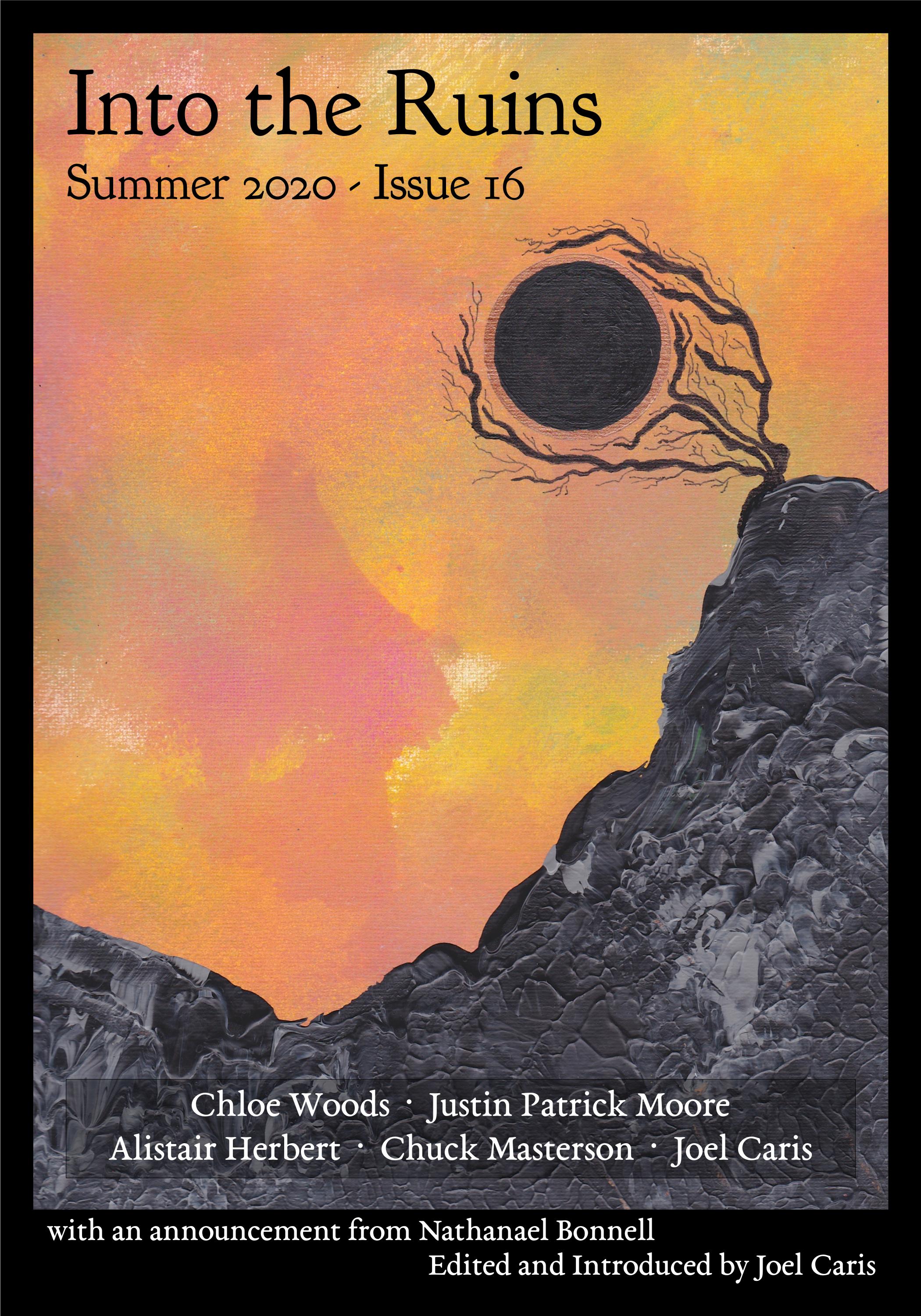
 Of The Hands