Author Archive
An entry in the Encounters series
I keep staring at the moon.
I only noticed it perhaps an hour ago. Granted, I saw earlier in the day on my wall calendar that it would be full tonight, but I’ve become so conditioned to cloudy nights that I feel like I haven’t seen the moon in ages. It’s just not out there most nights; I’m not used to looking for it. Yet tonight, I happened to glance outside and noticed a bright light in the night sky. There hung the very bright, very full moon.
It’s out there—visible, conspicuous—because today turned out to be a day of sun. While clouds came and went in the morning, the afternoon brought clear skies, blue and accented by that lovely daytime orb that’s grown so unfamiliar over the winter and early spring. In eventual celebration of said sun, I opened up a few of the windows while I went about making butter and seasoning a couple cast iron pans. Granted, I opened the windows more for the smoke from the pans. However, the cool spring breeze that began streaming through the house brought about a certain seasonal joy that overtook me. As I made my butter (which I’ll be writing about soon enough) I kept feeling that cool but exhilarating air, kept hearing the lambs and ducks, wind and birds, kept smelling the grass and dirt and kept remembering how achingly beautiful this area is in the overgrown thick of summer. It’s beautiful year round, of course, but when the plants are bursting and there’s even more green than usual, the skies are blue and the mountains bright, the breeze is warm and refreshing—well, there are few places so incredible I’ve ever experienced in this world.
That insistent breeze and shining sun brought about a pleasure that I’ve been missing of late. I haven’t been hiking in awhile and my forays outside have mostly involved work. While I certainly can revel in nature while working—one of the many benefits of working outside—I’ve tended in the last couple weeks to be more focused on tasks at hand and have done much of my work in less-than-lovely weather, which makes the appreciation of the natural world not quite so spontaneous. During my free time, I’ve been mostly inside, working on unpacking and cleaning, organizing and—yes, it’s true—engaging in various distractions like the internet and television. (More about that soon, as well.)
Today, though, I remembered that there’s a world outside, and that it often calls to me. I felt the sun, the breeze, the happiness of a clear and sunny day. I felt the emerging spring, the impending summer. As I felt these seasons, I made butter and listened to music, drank coffee and cleared smoke and felt a contentment that has been too infrequent of late.
Then came the dark of evening and this glorious, full moon.
Stepping outside into the cold night and taking a few minutes to just stare at it, to marvel at it, I couldn’t help but be reminded of what a gift the moon is. It’s really quite incredible, hanging up there in the night sky, such an otherworldly presence so regularly available to us. I find it slips into the background too easily for me, as does the night sky in general, that cascade of stars. Every now and then I’ll remember the beauty waiting up there above me—that glimpse into the universe, stretching out to such impossible depths.
It’s really a blessing to have. It’s a blessing to be able to look above me and see something that brings the world into such a sharp focus and provides us a context for our existence. I’ve been here in my new place, wrapped up in such a very small world and forgetting, in many ways, the much bigger world around me. It’s bound to happen, but it’s important to bring back an understanding of my context and to remember what makes me happy. The moon, bright and full and dominant in this Good Friday night sky—that makes me happy. An early spring breeze slipping in through windows that have been opened for the first time in months—that makes me happy. Homemade butter and freshly-seasoned cast iron pans—those make me happy.
Today lived up to its name. It was a good Friday. There’s a moon out there confirming it. I can’t stop staring at it and I don’t particularly want to. It reminds me of so much, calms me, brings about reflection and meditation, all while hanging there silent and present, offering an entire world of understanding and an even greater amount of mystery. How lucky I am to have that, and how amazing it is that I continue to be surprised by its presence, that I must so often be reminded of what’s always there waiting.
I suppose it’s inevitable, but there are times when you hurt people you care about. I did that recently with a post that was on this blog for a few days before being taken down.
I didn’t mean to hurt those whom I did with that post. But I should have had a better sense of its ramifications. Sometimes—and it has happened multiple times, I suspect, in the course of writing this blog—I get so caught up in the theory and philosophy about which I’m writing that I lose sight of the personal element to many of these posts. I am someone who uses personal experiences to illustrate the philosophy and ideas that I write about. It’s simply the way I make my arguments—there’s no changing it and I have no desire to change it. Yet, such a method requires a certain degree of thought, consideration and caution. I failed on all three counts with my previous entry.
To the people I hurt, I’m sorry. I care about them, they’ve treated me well, and I screwed up in offending them. I hope they’ll forgive me.
Those readers who saw the post will likely have noticed by now that it disappeared. I apologize, as well, to those who had commented on the post and on the disappearance of those comments. Those who didn’t read the last post but are otherwise regular readers have probably noticed the absence of any new content. What happened with the last entry is part of the reason for that. I’ve been thinking a bit about this blog, the way I write it, what I want to say and how to say it. I’ve been considering whether or not I need to change my approach and reevaluating ideas for posts. However, I also have been busy and in a period of transition, and that’s played a part in my relative silence here. I haven’t minded giving myself some time off from this blog, even though it has continued to call for my attention during the break.
I feel ready to resume my writing here, though. I may need another week or two before I get the How To Be Poor series going again, but I have some other posts I want to write. New content is on the way.
An entry in the Encounters series
Six weeks ago, I walked amongst the red rocks surrounding Sedona, Arizona. I was in Sedona after having driven my mother there and was able to take a few days to enjoy the local landscape, to sit in the sun and read, to walk in the desert and reconnect to a place I had visited once fifteen years before, when I lived in Arizona for a year. Ever since that year, I’ve felt a connection to the Arizona desert landscape and didn’t hesitate to take advantage of the chance to return to the state.

Bell Rock. Taken by Ken Thomas.
Twice while there, I walked the trails looping around Bell Rock and Courthouse Butte, winding my way across the red sandstone and between the twisting Junipers, the trail dipping down into washes and scaling rock outcroppings. On February 4th, I skirted around Bell Rock and took Llama Trail, which meandered away from Courthouse Butte. I lost myself in the rhythm of the hike, my breath syncing with my steps, the landscape unfolding around me. A bounty of birds flitted about in the branches of the surrounding Junipers—which were short and squat, hunkered down low to the ground—and I would stop on occasion to watch them for a few minutes, their quick and jerky movements mesmerizing. The day was a bit cool, the temperature in the fifties with clouds passing overhead. The sun peeked out at times but proved hidden more often than not. As I traversed farther along Llama Trial, the passing clouds turned dark and borderline foreboding, kicking up winds that suggested an oncoming storm.
Climbing up and out of a wash, I crested a small hill and came out the other side of a stand of trees, looking upon a wide expanse of red sandstone marked with small cairns. Off to my right, nearby cliffs towered high, as red as all the other rock and dotted with trees. Beyond the cliffs stretched the sky—and a series of heavy clouds promising rain. I carried a rain jacket in my backpack but no other rain gear. I hoped that any rainfall wouldn’t be too heavy.
In the middle of that stretch of sandstone sat a pair of large rocks, one of them perhaps three feet in diameter and the other a bit smaller and higher. A cairn balanced upon the smaller rock. I walked over to those rocks as an increasing wind stirred around me. From the vantage point of the two rocks, I saw a series of shallow pools forming a line in the sandstone, the worn cavities holding stagnant water from the previous rain. I dropped my backpack on the ground, next to the larger rock, and then went to one of the cavities, kneeling to inspect it. A dead scorpion caught my eye at that moment, its dried husk of a body perched on the rock about a foot from me. Just as I focused on the scorpion, a rain drop hit the stone right next to it, creating a sudden and surprising, tiny burst of darkness. It startled me. I glanced up at the dark sky and then over at the cliffs to my right. There, a mist in the distance—a fuzzy opacity in front of the cliffs. Rain falling. Moments later, more rain arrived, increasing in scale and intensity. The rain patterned the rock around the dead scorpion. Ripples spread in the small pool of stagnant water.
What am I to do in places like this, at such moments? I considered this as I retreated back to the pair of large rocks, toward my backpack and rain jacket. The wind grew stronger and the rain continued to fall, insistent but not overpowering, not yet drenching. I wondered how long the storm would last and how strong it would become. I could have retreated at that moment, beating a path as quick as possible back to the parking lot, but even that would have been something of a futile effort. I had no car at the parking lot—only the prospect of a further walk back into Oak Creek and the condo at which I was staying. Furthermore, I didn’t want to retreat. I wanted to experience. What am I to do in this situation? Abandon the desert, taking shelter somewhere inside, in an insulated building in which I can’t even here that it’s raining, in which I can forget what the world is doing and instead exist in my own oblivious comfort? Turn my back on the desert when it doesn’t provide my every comfort, a perfect encapsulation of my desires? Or sit on a large rock and welcome the storm, feel the water against my skin, the wind slipping around me, and smell the wetting of the desert rock and sand? I donned my rain jacket and chose the latter, settling myself upon the larger of the two rocks, crossing my legs and facing away from the nearby cliffs, looking out toward Bell Rock, the red ground, and the twisted Junipers.
As I sat there, staring out into the desert, the wind blew hard against my back, driving rain against the back of my head. The wind and rain were cold, but not freezing. Rather than discomfort, I felt exhilaration at the power of the weather—the heaviness of the clouds above me, the force of the wind, the abandon of the rain. The water opened up the sands and the desert plants, bringing forth a familiar and comforting scent. I reveled in the fluctuating sensations the storm provided.
Rain splattered against the stretch of sandstone in front of me, creating intricate patterns on the rock. As the wind blew, it brought the rain in waves. The waves painted the rocks—a visual representation of the wind pattern. Even as I watched it, though, the sun emerged from behind the patchy storm clouds and shone down as the rain continued to fall, alighting each drop on the stone, illuminating the wind’s pattern. As more rain fell, each hit upon the rocks created a short burst of reflected light and before long I saw the wind’s pattern in the waves of light—a rhythmic pulsing of cold wind and water coupled with the sun’s light, the collaborative art of the elements. It was beautiful. It was a magic, far better than any Christmas light display.
I marveled at all this. The visuals, the sensations of the storm against my skin, the sound of the wind flowing across the desert land and through the trees, the push of that wind against my back, the simultaneous chill of the wind and rain on the back of my head and the warmth of the sun on my front. It all came together to create a weaving of contrasts, a heightening of sensation that thrilled me. It awoke and inspired. It lasted long minutes that weren’t long enough.
Eventually the squall passed. The wind calmed and the rain trailed off, the sun-accented patterns on the ground drying and disappearing. I sat on the rock for awhile, holding onto and reviewing the memory. I thought of what it meant to be out in that power and restrained fury—at how much of a presence could arise in so little time, uncontrolled by us humans but capable of so much consequence. I recalled that first surprising moment of the rain drop next to the dead scorpion, its sudden appearance at the exact moment I trained my focus on the scorpion shocking me into the present world. I thought about sitting on the rock in the storm and how it might contrast with sitting under a tree, or under a rock ledge, in a yurt where I could hear but not feel the storm, or in an open field. I breathed deep the smell of the wet desert and for a few moments I stared at the cairn on the rock next to me, wondering about the person who had made it, about their love of this particular place.
Then I slipped off my rain jacket, returned it to my backpack, shouldered the pack and continued on. I continued following the Llama Trail for awhile until I stopped, pulled a small notebook from my back pocket and a pen from my front, and wrote, No machine, no matter how powerful it makes us feel or how much destruction it lets us wreak, can make us gods. Those machines are as dependent on the wide world as we are, and if we continue to degrade our home, they will fall first—followed shortly by us.
No machine is as powerful as that small storm. No human being is as significant. And nothing we’ve ever created is worth disavowing that beauty and power and exhilaration. Sitting on the rock, in that storm, I remembered how small I am as a human on this planet and how big the world is—how huge and daunting and empowering this world is, every day, if only we’ll acknowledge it. Everything we create is a piece of that world. Everything we create is subordinate to it.
We need those kinds of storms to remind us of this. But we need them, also, to remind us that such a reality is a good thing. If we could tame such storms through our creations, the world would be a lesser place. If the world was of our making rather than something far larger than us—far more complex, mysterious, magical and incomprehensible—than it would be a lesser place. I’m happy we’re subordinate to the world and not the other way around. I’m comforted by it, in fact. It means that there will always be those moments when the world takes me over, surprises me, asserts itself in the most unexpected of moments and makes me remember who I am, where I am, and how little I know. It can be just a rain drop, at just the right moment. It can be the art of sun and wind and rain. It can be hot and cold at the same time—front and back, two powers meeting. It can be the world, finding me on a desert afternoon, out on the rocks with nowhere to go. But it’s all beauty, and power, and magic, and appropriate. And I’m thankful that I was there that afternoon, that I saw the world’s beauty in a way I never had before. I’m thankful to have been reminded in that moment of how small I am and how large and unexpected the world is.
I’m thankful for what the desert told.
An entry in the How To Be Poor series
In my previous entry in the How To Be Poor series on voluntary poverty, I argued that many people’s dietary choices reveal the sort of luxury we have available to us today in industrialized nations. By choosing what we eat from a wide variety of foods, without regard to the limitations and constraints inherent to our local landscape and personal circumstances, we often provide ourselves a diet possible only in an industrialized world swimming in cheap energy and resources. Our context is utterly unlike that of most all others throughout human history.
In making that argument, I suggested that how we eat may be as or more important than what we eat. It’s a mark of luxury that the specific foods we eat can be mulled and considered and decided upon, rather than being dictated to us by a strict set of circumstances. If, instead, those circumstances dictated our food, what we eat would not so much be the question and we might instead focus on how we eat, with that determination providing us the method of building meaning into our diets. Creating a set of moral and ethical codes around the how of eating rather than the what of eating makes more sense in a world facing serious energy and resource constraints.
Still, we don’t yet face that world, though it certainly seems in the process of asserting itself. For those of us attempting to eat well, we face instead the question of what to eat, which is an important question. I wrote in that last entry that “I’m not saying these questions are irrelevant or unimportant, but they are often borne of luxury.” I think that line could come across as flippant, disavowing the importance and implications of what we eat, and that’s not at all how I want to treat the subject. No, I think what we eat is very important. As a simple matter of very specific circumstances dating back millions of years, we find ourselves in a period of human history in which those of us living in industrialized nations can choose to eat almost anything we want, regardless of the time of year or where that food is capable of being grown, raised, processed or produced. That reality places a significant burden on us to attempt to eat well. Since we don’t find ourselves restricted by our local context, I believe we’re left with the responsibility to do our best to eat in a way that is nondestructive. We should eat foods that serve well our bodies, the land, animals, farmers, our environment, other humans and the soil. Our eating should not worsen the state of the world. Ideally, it should nourish it.
And yet, that’s not how we tend to eat. Most of us eat in ways that worsen the world; that exploit farmers and animals; that destroy land bases, soil and waterways; that are built upon suffering and cruelty; that impoverish other human beings; that degrade our bodies; and that serve to further sever our connection to the world around us. We often eat fast, dirty, and thoughtless. We fail in our moral responsibility—often we fail to engage that responsibility at all.
There’s nothing surprising about that. There was a very perceptive quote from Bruce Friedrich that I first read in Jonathan Safran Foer’s Eating Animals. In arguing for vegetarianism, Friedrich asks, “What does it say that the leaders of the ‘ethical meat’ charge, like my friends Eric Schlosser and Michael Pollan and even the Niman Ranch farmers, regularly pull money out of their pockets and send it off to the factory farms? To me, it says that the ‘ethical carnivore’ is a failed idea; even the most prominent advocates don’t do it full-time. I have met countless people who were moved by Eric’s and Michael’s arguments, but none of them now eat exclusively Niman-type meat. They are either vegetarians or they continue to eat at least some factory-farmed animals.” While I’m not impressed by some of the things Friedrich says before that quote, I find this particular observation to be spot on. As I’ve noted, I started eating meat again after reading The Omnivore’s Dilemma with the idea that I would eat good meat. While I follow through on that ideal a good percentage of the time, I still find myself getting the occasional hamburger at a bar that comes out of the Sysco supply chain or buying bacon from New Seasons—which is much better than Smithfield, but far from a small, local, humane ideal. The reason I fail at times is a combination of availability, convenience, and lack of will power. If I’m at a bar and I’m drinking, I’m hungry, and it’s on the menu, I’m going to order that hamburger, even if it’s not grass fed and from a local rancher. I fully understand the implications, but I give myself a pass and dig in. It’s an available moral failing and I take it.
Most people do much the same thing, either part of the time or all of the time. We don’t tend to eat with our brains but with our heart and stomach. We give in to desires—this is one of the reasons there’s a number of massive and profitable industries built around food and diet. Food is something we think about, obsess over, attach moral implications to, satisfy emotional urges with, and which provides us the very sustenance of our lives. It’s a relationship rooted in messiness and complication and the industrial world we’ve built around us has only served to complicate that already complex relationship by vastly opening the choices before us—and vastly increasing the moral implications of what we do decide to eat. The food we normally would eat has become far more corrupted via poor farming practices and the food we normally wouldn’t have available to us now is available and serves to tempt us in ways it never could before. These realities have imbued the question of what we eat with moral implications that it never had before, and as such has shifted our concerns more firmly toward the question of what rather than how.
This isn’t a good thing. While I love having the easy access to sugar and animal products, coffee, chocolate, fruits that would never grow here, ginger and coconut milk, and so many other foods that I wouldn’t eat if not for our industrialized world, I can’t endorse this availability. It’s distorted our ways of eating and skewed them toward destructive ends. It makes every meal fraught with moral and ethical considerations, often turning those meals into exhausting acts full of self-doubt and worry. Recent neurological research, as outlined in a New York Times article, suggests that as we make decisions, we deplete our will power. We become less able to make good decisions until we’ve restored that ability to our brain, which is tied to glucose levels. In other words, our decisions around food are particularly likely to be based in irrational thinking as we often crave sugar as a way to restore our decision-making abilities. But even aside from food, the need to make constant decisions saps our will power over time and degrades our ability to keep ourselves firmly within self-established limits.
In other words, deciding how to eat well is not a simple matter of rational thought, education, or strong morals. All of those things have their effect, but they’re part of a much more broad and complicated act of decision-making that is tied as well into brain chemistry, sugar levels, genetic predispositions and emotional signals. So while it’s important to acknowledge the moral importance of eating well in a world awash with bad food, expecting moral implications to lead to good eating amongst the world’s population is a fool’s game. There may be the rare person out there who is capable of eating at all times within a strict moral code, but the vast majority of us are not going to manage such an impressive feat. We’re going to make decisions that are not going to be good for the world—sometimes purposefully and sometimes not.
I recently read William Catton’s Overshoot and the final paragraph of chapter ten has been haunting me. Catton writes, “Using the ecological paradigm to think about human history, we can see instead that the end of exuberance was the summary result of all our separate and innocent decisions to have a baby, to trade a horse for a tractor, to avoid illness by getting vaccinated, to move from a farm to a city, to live in a heated home, to buy a family automobile and not depend on public transit, to specialize, exchange, and thereby prosper.” Our behavior, in other words, has been perfectly natural. If we see humans as simply another species on this planet, as I do, then we can see how we would make these poor decisions. We can understand why we would eat foods available to us even if those foods increased misery throughout the world. We can see how we would crank the heat even if we knew we could put on a sweater instead, and even if we knew that heat comes from fossil fuels that pollute the world and that are quickly being drawn down. We can recognize that we are animals, not perfect moral beings, and that we will as often as not choose the route of comfort and convenience and satisfaction, even when we intellectually understand the long-term downfalls of those choices.
So while, yes, I think we have a moral responsibility to eat well—much as I believe we have a moral responsibility to live and work well—I don’t think we can undertake such lives via morals alone. Our morality is only so strong and is only one piece of a tangled web of emotion and physicality, genetics and desire, social and cultural norms, and so many more variables. Attempting to engage all of those variables and always still make the right choice is an exercise doomed to failure, and one that will exhaust and break us in the process.
What we need instead is a life of limitation. We need less choices, fewer options, more constraints. A life lived more local and constricted by context would help to absolve us of many of the decisions and options that globalization and industrialism has foisted upon us. Such a life would necessarily be of a smaller scale, rooted in the local land and intimate knowledge, rather than resources that can come from anywhere in the world and through the debased, standardized knowledge of industrial systems. Such a life would limit our impact on the world not by forcing us to choose each time to limit our impact, but by limiting our ability to make such impacts.
This, again, gets at the absurdity of the challenge of voluntary poverty, as I wrote about in Our Distorted View. It shouldn’t be hard to live poor, but it is when you have money and so many options to live otherwise. If we’re constantly facing that temptation and constantly having to make the decision to live a modest life in the face of the ability to do otherwise, we’re quickly going to exhaust ourselves and make poor decisions. So to live a life of voluntary poverty, we need to build limitations and constraints into our lives.
Living here in an off-the-grid homestead has provided all kinds of lessons in that reality. We heat the buildings via wood stoves, which require more work than the simple flipping of a switch or turn of a dial. That leads to less heat, as the effort to produce that heat discourages unnecessary usage. Our hot water also comes from a wood stove, as well as solar hot water panels. That teaches us to pay attention to the weather and to limit our showers. There simply isn’t always hot water without some work, so none of us showers every day—which is unnecessary anyway. We have electricity via solar PV panels and a microhydro generator, but not an abundance of electricity. Generally we can run what we need to, but we’re not powering big screen TVs or using electric heaters or blow driers and we can’t run, say, the electric tea kettle and the hot plate at the same time. We further can only run devices that use small amounts of electricity (such as CFL bulbs) on a continual basis and run high-power devices in short burst. That’s fine—I quickly grew used to these limitations and they hardly impede my life. But it’s a different reality from being hooked up to the electric grid and having essentially unlimited power at your disposal.
These limitations are ingrained into life here and they quickly slip into the background, barely worth thinking about. As a part of life, they do an excellent job of limiting energy and resource usage while providing, at worst, a bit of inconvenience—and often not even that. I live a good life here, possibly better than I have anywhere else, and likely with less energy usage than I’ve used anywhere else.
That, to me, is the goal of voluntary poverty. Finding that way to live that uses less energy and resources while still providing a good life. It’s not the easiest goal in the world, but it certainly is a possibility. Yet, it has to involve the creation of limits and constraints—a context of living that naturally leads to a downsized life. As I prepare to move to a new situation, I’m going to find myself back on the grid, with more living space and constant hot water and changed circumstances that are likely to lead to me using more energy and resources. Leaving behind this off-the-grid homestead, I’m going to have to craft the context of my life to introduce some of the constraints that my current home featured by default. If I don’t do that, I’ll live larger than I want to live, too often making the easy decisions when they present themselves to me. I’ll be able to heat at the flick of a switch, to shower any time I want, to cook by turning a nob rather than stoking a wood stove. How will I deal with those conveniences? How will I stop myself from slipping too easily back into something more akin to a middle class American lifestyle?
These are some of the questions I’ll be writing about as this series continues. It will be a challenge, but I expect it to be a good one. I hope, as well, that my attempts to live in a home more closely approximating the standard American set up will help me to provide more useful information to my readers. Most of us don’t live on off-the-grid homesteads and so the constraints we need are ones we will have to put into place ourselves, as often as not. That creation of our context is going to be a main focus of this series. To lay the groundwork, I’ll be writing soon about the home I’m moving into and the decisions and tradeoffs that led me to this living situation. Those decisions were rooted in constraint, as well, and will help to illuminate some of the frames of mind we’re going to have to dispose of if we’re to live well in a poorer future.
This week, I took a few days to go into Portland to see family and friends, run errands, and revel in the warmest days of the year. Spring in Portland is a particularly wonderful experience. There’s little that’s better than wandering around pleasant Portland streets while the sun is bright and the sky clear and blue, providing for at least one day the warm and sunny spring I so desperately hope we get this year.
Due to my trip into Portland, though, and four hours of cleaning today as I prepare to move from my yurt to the farm down the street, I haven’t had much chance to write a new post. I feel bad that it’s been so long, so here are a couple pictures to help tide you all over until the next real entry, which will hopefully arrive Sunday night. In celebration of spring, I’m going green for these photos.

Cutting arugula in the hoop house last summer. I used to hate cutting greens, but I've long since come to really enjoy it. Arugula is one of my favorites.
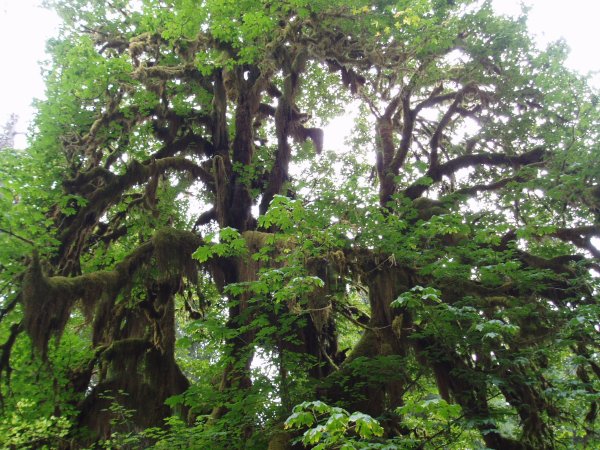
This is from a 2003 trip to the Hoh Rain Forest on Washington state's Olympic Peninsula. The tree would seem to be some kind of maple—perhaps a Big Leaf? Sadly, my tree identification skills are not nearly as good as they should be. I labeled it as a spider tree when I took the picture, and I love the draping moss. The Hoh Rain Forest is insanely beautiful and highly recommended, if you ever get a chance to go.

This is a stretch of the Pacific Crest Trail, coming out of Panther Creek in Washington, and one of my very favorite hikes. In fact, it's where I first went hiking—with my father, during a camping trip. I owe him for showing me this glorious bit of the PCT and instilling in me a love of hiking that's served me well throughout the years. There's probably no trail I've hiked more often than this one. I know it intimately and I'll always love it.
An introduction to The Household Economy
As I write this, the smell of fresh, baking bread is wafting from the wood stove here in the farm’s main, communal house. The bread is one step in my attempt to come up with an easy and tasty recipe for sandwich bread. I’m doing this not because I can’t get good bread at the store—there are, as a matter of fact, multiple local bakeries that produce delicious sandwich bread, using good ingredients. No, I’m doing this because I want to take that small bit of dependence and bring it back into the home, to root that dependence not in a complicated and industrialized supply chain, but in my own work and care, my own flour-dusted hands.
Of course, looking at the title of this blog, that might not be a surprise. This originally started as a blog that would be focused primarily on farming and homesteading, and I imagined the possibility of perhaps teaching the occasional homesteading class out here on the Oregon coast, with this site functioning partly as a way for me to advertise such a business. As that idea faded into the background and my life took a different turn, the blog slowly morphed into what it is now: a cataloguing of my thoughts and experiences, certainly featuring farming and homesteading but also dealing quite a bit with peak oil and other energy issues. Yet, all of those subjects are interrelated and I likely wouldn’t be attempting to refine my own bread-making skills if I thought the store would be there forever and I could always afford the five or so bucks for a good loaf of bread. Why, after all, should I bother, given such considerations?
Well, there are many good reasons, including ones that hold up even while the stores remain open and five bucks always resides in my pocket. One is the satisfaction of creating my own living, even if it’s in a very small way. In a society that seems every year to tilt more toward the abstract, engaging in some good, old fashioned physical creation (not just the late night kind) is quite a satisfying experience. Much as in building a wooden gate, I find baking a loaf of bread, cooking up a pot of stew or making some ginger ale to be very elemental, and very good for the soul. There’s a real sense of pride and comfort in being able to make something for myself rather than buying it at the store. Furthermore, the more I create things, the less mystifying the process of creation becomes. As I build these skills, I feel more secure in my ability to figure out other necessary tasks and more willing to take on new projects. Before, when I was beholden to others for most all things rooted in the physical world, I found much of that world mystifying. I didn’t know how things work. Now I better understand.
There is, however, a bigger picture here. As is clear for anyone who’s spent time reading this blog, I think we’re all going to be poorer in the future due to energy and resource constraints, and I further think that beginning the process of preparing for that reality now makes far more sense than putting our heads in the sand and pretending that the powers that be or technology is going to pull our ass out of the fire at the last moment—especially since there’s no good or compelling reason to believe in that as a likely scenario.
One of the ways in which we’re most vulnerable to such a future is rooted in the reality that most of us in industrialized nations have outsourced a very significant percentage of our living. While human history has largely consisted of people making their own living via the combined labors and support of their community, we’ve come to mostly replace that community and its labors with various businesses, corporations, and other entities providing our needs via industrialized production methods. Since those methods are necessarily dependent upon fossil fuels—the exact fuel we already are running short of, and will run yet shorter of as time progresses—we find ourselves very vulnerable to a future of energy and resource shortage. If the grocery stores were to disappear tomorrow, a good number of us would be in serious trouble.
Luckily, the grocery stores don’t appear set to disappear tomorrow. However, anyone who thinks they and the industrial, globalized food system that backs them is fated to live forever is quite mistaken. That system is going to fail, and before it fails it’s going to provide us some serious dysfunction. Of course, it already is providing plenty of that. Look at rising food prices, huge food-borne illness outbreaks tied to industrial supply chains, the massive losses of arable land and topsoil across the world, depleted aquifers, poisoned water supplies, and a host of other destabilizing ills. This system is breaking apart before our very eyes, but many of us refuse to see it, or—upon seeing it—refuse to recognize the full breadth of its implications.
Seeing the precariousness of the industrial food system—and other industrial elements of the economy—with clear eyes would lead us to the conclusion that it’s in our best interest to minimize our dependence on it. This is where the household economy comes in. There are a few ways, working within the household, that we can lessen our dependence on the dominant, industrial economy. One of the main ways is by growing and raising as much of our own food as possible. This can be done via gardening, permaculture, planting fruit and nut trees, raising livestock, foraging for wild foods, hunting, and so on. All these activities begin the process of us making our own living and increase our resilience and self-sufficiency—the increasing of which will come to be quite the boon in an age of scarcity and contraction. Even if we aren’t able to or don’t produce any of our own food, though, we can still lower our dependence on the industrial economy by turning to local farmers and ranchers whenever possible and then utilizing another feature of the household economy: the in-house processing of our foods. The aforementioned bread-baking is one of these. Making jam is another, as is canning produce, lacto-fermenting veggies, making condiments, brewing our own beer and sodas, making kombucha and yogurt and cheese, sour cream and kefir and butter. There are all kinds of activities—many of them not that challenging, after a bit of experience—that we’ve unnecessarily outsourced to corporations.
That bread I mentioned earlier? Well, I’ve now eaten three slices of it, slathered with butter, and accompanying a lamb stew I also made. The stew used a package of lamb riblets from one of the farms I work for and was thus acquired in work-trade—and I helped raise the lamb. I slow cooked it for hours in our wood stove, making broth while simultaneously cooking the meat. To that, I added potatoes, carrots, onions and garlic for a simple and delicious stew. The veggies, aside from the potatoes, came from the farm I live on. (The potatoes would have, except we ran a bit short this winter.) So, all in all, I ate a meal tonight borne largely of the household economy, with minimal inputs from the industrial economy. It was delicious, and nourishing, and satisfying in both its preparation and eating, resilient in its minimal dependence on outside systems, and far more sustainable than a meal eaten at a restaurant would have been, or prepared out of a box, or bought from the store.
Which brings me to another benefit of the household economy. Aside from the unsustainable amount of energy and resources we use in industrialized nations, our outsourcing of our living to corporations gives them an incredible power over our lives, our culture, our society, our economy and our political system.
Let’s say, as a mental exercise, that you find yourself on the street, enjoying a lovely day, taking a walk around the neighborhood. A stranger comes up to you and begins to berate you, spewing profanity, agitated and angry. What would you do? I suspect most of us would take our leave of this person, or tell him to leave us alone—possibly in unfriendly terms—or in some other way extricate ourselves from the situation. Imagine, now, that it isn’t a stranger but your boss. At that point, it becomes quite a bit trickier, doesn’t it? Our boss holds a certain power over our lives, being able to interfere with our means of making a living. You may still tell your boss to knock it off or walk away, but by doing so you risk retribution, perhaps a firing. Even if that’s unfair—even if you could take your case to a court and win—you still face the potential of a disruption of your life. It’s a much more complicated situation.
By relying on corporations and other businesses to provide us our living, we make them our boss. We become beholden to and dependent upon them and that limits our ability to push back against them when they behave in an improper manner. There’s quite a lot of concern that corporations have gained too much power in recent times and use that power with impunity, polluting the earth, exploiting land, people, and communities, extracting wealth, corrupting our economic and political systems and running roughshod over much of the population. These are legitimate concerns, to say the least. But if we want to reign in these corporations and work to strip them of some of their power, we’re going to be seriously hampered in our ability to act if we’re also dependent upon those same corporations to provide us the means of our living.
There are reasons, for instance, that oil companies have vast political power. One of those reasons is that we need oil, desperately, to power the society we’ve become used to. If we didn’t need that oil to power our society—if we had the option to opt out of its use—than their power would be greatly reduced. If they had for sale a simple product rather than a necessity, their power wouldn’t be so great. We would have more ability to push back against them.
This is relevant on a somewhat more abstract level, as well. Right now, our lives are dependent on fossil fuels and all the destruction and inequity their use has come to entail. Most of us in industrialized nations would be at a complete loss without fossil fuels, our way of life pulled out from under us, extremely vulnerable and subject to significant impoverishment at best, death at worst. Due to that reality, we’re going to ultimately support the use of fossil fuels no matter what. We may talk a good game against them, agitating for change and reduced use, but our dependence on them necessitates that we continue to use them and to subject ourselves to the systems created around them. I do exactly that as I write this on a computer and ready the posting of it on the internet. Every time we make use of the industrial infrastructure, we support all it entails. If we don’t want to support that, we’re going to have to make much less use of that industrial infrastructure.
This is the crux of the argument for individual change, in my mind. We can’t get away from these systems at a societal level until we get away from them at an individual level. We can’t alter our economic and political systems until we alter the individual actions that support them. Yes, those individual actions are influenced by those systems, but it’s through individual change that we’re going to create any will to alter those systems. Without that element, we’ll be left dependent and beholden, with little to no power to change what we see wrong with those systems. And if we stay beholden to these systems, politicians will continue to support and uphold them, knowing that any imposition on those systems will be passed down to the public and that the public, whatever they might claim, will for the most part punish the politicians in turn.
There’s another, deeper layer to this argument, though, and that’s rooted in the predicament we face that I’ve written about before. If there was a broad, large scale system capable of supporting our current way of living in a sustainable manner, then it might make sense to attempt a switch over to that system rather than focusing on individual behavior. However, even if that could be done, we would need for a different system to be available to transition to without having to change individual action. We would need, in other words, the system that so many people in our society like to advocate: our current lives, largely unchanged but powered by renewable energy.
If this were possible, then it might make sense to advocate for it. It might not make sense, either, as it would not address the core issues of industrialism that lead to exploitation and destruction. It wouldn’t address resource issues or all the other natural cycles of renewal that we’re going to have to learn to live within, such as the renewal cycles for top soil and fresh water. It wouldn’t address ecosystem stability and biodiversity. But all those concerns aside, the problem here is that such a switch isn’t possible. There’s no way to power our way of life without fossil fuels. There’s no way to build the sort of centralized, industrialized renewable energy system that’s so often advocated without an industrial base powered by fossil fuels. The solar PV panels and wind turbines are made with fossil fuels, made from fossil fuels, and dependent on a vast industrial infrastructure powered by fossil fuels. We’re already facing the beginnings of constriction. We’re not going to be able to divert massive amounts of fossil fuels to these alternative uses, and even if we were able to do that on such a scale, it wouldn’t be supportable in the long term. Eventually, the fossil fuels run out and then so do the alternative energy technologies built on top of them.
Furthermore, even if such a system were possible, that still wouldn’t address the fact that we use our energy to power an industrial economy that is tearing apart the earth and its ecosystems. If we were to find some magic bullet solution to the energy problem, we would still be faced with the necessity of drastically scaling back our lives so as to avoid the sort of crash that always happens when a population overshoots its carrying capacity—or, more realistically, to limit the damage of that crash. We are already far past carrying capacity, even if we were magically able to switch over to an economy powered entirely by wind and solar tomorrow. We still would be consuming the earth and industrialized nations would still find their populations facing a necessary scaling back to a life more akin to non-industrialized nations.
Therefore, we find ourselves back to the necessity for individual change. Our scaling back begins in the household. It was not so long ago that a good deal of America’s economic activity happened in the household economy. To this day, many non-industrialized nations have thriving household and subsistence economies—it’s how they survive. Thus, it likely won’t be that long before we’re back to a similar reality. As we all become poorer, resources become tighter, and money becomes harder to come by (or less able to purchase goods and services) we’re going to find ourselves having to make use of our own labor and good work to keep up a decent standard of living whenever possible. Rather than spend five dollars on a nice loaf of bread, we’ll more likely bake it at home for a fraction of that cost. Rather than buy expensive organic jam, we’ll make it from the fruit or berries supplied by a nearby farmer, or picked out of our own back yard. Rather than purchase a variety of dairy-based products, we may just find a local source of fresh milk and make our own butter, yogurt, sour cream, and so on. Rather than eat out, we’ll make our own meals. Rather than buy a tiny, three dollar package of basil, we’ll snip it off our own basil plant.
We’ll recycle, and reuse, and wear things out. We’ll darn our socks and patch our clothes, mend our shoes, and learn the fine art of attrition as we simplify our lives, whether we want to or not. We’ll make blankets out of leftover scraps of cloth. We’ll cook our food in hayboxes or on rocket stoves. We’ll brew our own beer, make our own hard cider. And we’ll learn to rely on the other members of our community to help us make our living rather than on faceless, dominant corporations and on the continued functioning of assembly lines populated by robots.
This is the reality that I think will be asserting itself. It’s a reality, as well, that offers us the hope for a better future than the one we might otherwise have. If we begin to grow the household economy, we’ll begin to provide more of our own living, gain a greater control over our own lives, insulate ourselves against economic shocks, free ourselves from dependence on entities that would as soon harm us as help us, begin the process of building relationships, strengthen our community, and provide more space to work for a better society. It may not all turn out well—it probably won’t. But we’ll give ourselves a much better chance than if we just wait for someone else to fix our problems, then wonder what the hell we’re going to do when the industrial infrastructure that keeps us alive begins to crumble beneath us. We also will gain a satisfaction from our own labors, will likely find ourselves much healthier, and will refocus our attention from useless and unhealthy distraction toward good work done in support of ourselves, our family and friends, our community.
This series of posts, then, will focus mainly on my trials and tribulations with getting my own household economy going. It’s already up and running to a degree, but it could stand to be enlarged, to encompass more of my living. And it’s going to find some changes this year with my shifting circumstances. I’ll be writing, therefore, about my adventures in gardening, my various homesteading activities, possibly some building projects using reclaimed and recycled materials, and whatever other paths my particular household economy takes. This will be something of a companion to my How To Be Poor series of posts, in that it will focus more on the actual activities with which I reduce my costs of living and usage of energy and resources, while How To Be Poor focuses more on the theory and philosophy of voluntary poverty—though I reserve the right to occasionally veer into the theoretical, as I may very well do in the next entry.
Throughout most of history, we’ve made much of our living at home and in our community. Over the last few centuries, we’ve slowly outsourced that living. In the last few decades, we’ve mostly abandoned it to the province of corporations and governments. It’s time to bring back the household economy, both as a necessity and as a moral good. It’s time to reacquaint ourselves with our own living. It’s time to get off this misguided path and return to normal.
This morning I woke up to the farm covered in maybe half an inch of crunchy, icy snow. It provided just enough blanketing white to turn the gardens and the surrounding forest into a winter wonderland. We rarely get snow here, but when it does fall this is one of the most beautiful places to be. Since I recently stumbled upon my camera’s lost battery charger, I figured I would fire up the camera and take a few pictures. It’s been a long time since I posted any photos here on the blog.
I also am hoping to get a post proper up later today, or perhaps tomorrow. I should have enough free time to get something written. Now on to the pictures.

Brian's Japanese house tucked in the snow-covered trees, with the chicken run in the foreground. The house is really a beautiful, amazing home.

Blue sky peeking through the clouds, above the snow-covered trees. In the foreground are some snowy beds. This side of the farm, however, is going to be put into perennials this year.

My little yurt, otherwise known as home. I love living here. It's about 12 feet diameter and nestled in the second section of the farm's upper gardens. Sadly, I'll be moving on in a few weeks. It'll be pretty easy packing, at least.
An entry in the How To Be Poor series
To better understand the distorted viewpoint of our culture that I wrote about in the last post, I want to talk about food and diet. As I tend to reference my own experiences in these posts, I want to write initially about my own changing diet over the years.
I have spent a good portion of my life attempting to eat in a moral and ethical manner. This has boiled down, as often as not, to a focus on eating certain foods and not eating yet other foods. For sixteen years of my life, this approach underpinned my vegetarianism. I ate dairy and eggs during that time, but didn’t eat meat of any kind. I came to that diet while living in Arizona as a teenager and it was greatly influenced by the New Age community I found myself interacting with there. I became vegetarian largely for moral reasons and partly for health reasons (ironically, considering how poorly I ate as a vegetarian.) I even believed at times that eating meat would lower my body’s vibration level. Looking back, I feel a bit ridiculous about that.
As parenthetically noted, I didn’t eat well during my vegetarian days. Having never learned to cook much and rarely having anyone to cook for me, my diet tended toward prepared, processed and packaged foods. Boxed pasta mixes and frozen pizzas were staples and spaghetti made with jarred sauce constituted my primary culinary adventures. Looking back, it seems ridiculous that I would think a diet of processed foods was a more ethical and healthy way of eating simply because it didn’t involve meat. That seems the very definition of blind reductionism, but it was a blindness I suffered.
Upon reading The Omnivore’s Dilemma, I began to warm to the idea of resuming my meat eating ways, but with a focus on eating sustainable and well raised meat. I eventually made that change and, not long after, discovered Nourishing Traditions and the Weston A. Price school of dietary thought. I read Nina Planck’s Real Food. I found a source of raw milk and started consuming it with abandon. I experimented with fermenting veggies and soaking grains, though I never integrated those foods into my diet on a regular basis. Finally, a few years ago, I read The Vegetarian Myth and reached the peak of my infatuation with a diet focused on the eating of healthy animal fats and proteins. I found myself convinced by Lierre Keith’s book, which argued that the healthiest, most ethical and most sustainable dietary choice was eating a good amount of animal fat and protein from animals raised well, as well as a certain amount of fresh fruits and veggies and minimal grain.
In conjunction with my focus on well raised animal products, I also had started to farm. This lifestyle greatly improved my diet, significantly boosting my cooking skills and knowledge and providing me plenty of abundant, fresh vegetables with which to work. I became more familiar with making simple, sustaining meals—the sorts of meals I should have been eating during my vegetarian days. In tandem with the increased physical labor of farming, I felt healthier, dropped some unnecessary weight, and began to see the joys of a local and seasonal diet. Not that I ate such a diet exclusively, but I moved much closer. And that has continued up until this day. I probably ate better and more local and seasonal this last year than any other, with much help from the fantastic people I lived with and our communal meals.
With all these different changes in diet over the years, a common thread starting with my vegetarianism (and, really, before then—I remember calling McDonald’s as a child and asking them to stop using styrofoam for their packaging after watching a 20/20 report with my parents) was the idea that what I ate played a large role in my moral and ethical well being. I couldn’t help but feel that my diet was important—that I influenced the world, its health and happiness, through what I ate. Of course, that’s true. Our collective diet plays a massive role in how we live in this world. Yet, I couldn’t stop looking at this effect through the prism of what I ate rather than how I ate.
This perhaps shows itself most clearly through my vegetarianism. I boiled my moral decision down to meat and failed to look at any of the other implications of my diet. Later, when I became convinced by The Vegetarian Myth that eating animal protein and fruits and veggies was the way to go, I looked at it with something more of a holistic viewpoint—questioning what kind of an agriculture could truly be practiced sustainably and realizing the destructive aspects of monoculture grain production, even if done organically—but I still boiled it down to a set diet with rigid guidelines, creating an ideal and only then trying to figure out how I might meet that ideal locally.
Our society, furthermore, is filled with these ideals. There are thousands of books laying out rigid dietary guidelines that promise you the world: a healthy body, a better environment, long life, good sex, happiness, joy, moral satisfaction, so on and so forth. What these diets typically have in common is that they have all kinds of guidelines that they attempt to apply to everyone, with little to no regard for local circumstances, the climate you live in, your particular body, your childhood diet, your likes and dislikes, the kind of work you do, or what kind of agriculture exists locally. The assumption is that you can eat whatever you choose. And this is an assumption that can only exist in the context of massive luxury. It’s, in other words, one of the very distorted viewpoints of our society borne out of a globalized, industrial economy floating on the warm waters of cheap and abundant fossil fuel energy.
Most of human history has not seen such luxury and personal diets formed accordingly. Most people have been constricted by their local agriculture or local wild foods, with minimal or no trade providing non-local foods. Most people, furthermore, have been limited by their own means of acquisition. Plenty of people have been subsistence farmers, eating largely food they have produced themselves and whatever they can acquire in trade using that same self-grown food. Others have eaten on a strict budget, unable to purchase a wide variety of luxury foods even if those foods have been available. It’s a unique circumstance in the history of humanity that we find ourselves in today, in which a significant portion of the populations of industrialized nations have access to food from across the world, throughout the year, and have enough money to buy most any of that food and thus craft whatever particular diet they should want.
This is where we need to make a sharp distinction between necessity and luxury. Necessity is having something to eat—having enough to eat. Luxury is being able to eat whatever diet you decide you prefer, whether that be for matter of taste, health or ethical concern. In a world in which luxury is taken for granted, the morality of eating easily can be transformed from how you eat—by the care you take in eating the foods that are available to you—to what you eat, with little regard for your local circumstances. If you’re living by necessity and therefore feeding yourself within a very limited range of available foods, then moral concerns about your diet have to skew more toward the “how” side of things. What are the traditions of eating? How do you relate those traditions to your larger moral framework? How do you go about acquiring your food? How much do you eat? What kind of thanks do you give for it? What care do you take in the eating of it, the growing and raising of it if you have any control over that? If you’re living in luxury, then it’s much easier to skew your moral concerns toward the “what” side of things. Am I eating grass fed meat? Am I not eating meat? Am I eating grains that are destroying the prairies? Am I eating organic produce? Is my food locally produced? I’m not saying these questions are irrelevant or unimportant, but they are often borne of luxury.
If you find yourself in a famine, chances are you’re going to eat whatever food becomes available to you. If you’re starving, it’s unlikely that moral convictions about not eating meat are going to keep you from eating some goat meat stew if someone should offer it to you. Furthermore, if you’re someone who can’t seem to comprehend the idea of eating grains and vegetables as the core of your diet, then you better change your opinion real quick if you find yourself in the midst of a famine because you’re a lot more likely to get your hands on a meal in that dietary realm than you are a juicy hamburger. Do you think that grain production is inherently destructive of natural ecosystems and that a diet of grass fed meats, eggs from pastured poultry, raw dairy and a smattering of fruits and vegetables grown in rotation on farms incorporating animals is the most sustainable diet? Well, you might not find any such diet available to you a few decades from now, when constricted fossil fuel supplies and an overcrowded planet have greatly increased hunger rates and—in the rough and rocky crash following our current overshoot—grain staples are far easier to come by than pastured meat. The above diet may be one of the more sustainable ones available to human beings—and I don’t know if that’s true or not—but that’s going to support perhaps a tenth or less of our current population. If a few decades from now our governments and local economies are struggling to feed seven or eight billion people on a planet no longer sporting the sort of fossil fuel supply that can support such a population, you’re far more likely to gain access to a ration of grains or potatoes than a nice grass fed steak.
What this comes down to is the necessary imposition of limits and constraints. Much of the challenge facing us in terms of a transition to a more sustainable—and thus, much more poor—way of living is the fact that we have access to this luxury. It’s no surprise, then, that we take advantage of it. That’s pretty standard behavior for any species. If we can eat most anything we desire, it’s not a shock that we’ll eat foods that otherwise wouldn’t be available to us and it’s not a surprise that in determining the moral ideals of our diet, we’ll tend more toward what we eat than how we eat it. That’s the foreseeable outcome of having access to this level of luxury and functioning within the context of the distorted viewpoint that luxury affords us. We make our choices by working from the context of having everything available to us and then trying to come up with an unconstrained perfection. If we were working outside of this odd level of luxury, we would instead be looking at what our limited resources were and then trying to make the best of what was available to us.
We can’t live outsized, overabundant lives if we don’t have an abundance of wealth available to us. In the future, we’re unlikely to have the sort of abundance available that we do today. This, as I’ve said many times, is one very good reason to attempt to start living on less, so that we adjust to this way of life and figure out some of the better ways to do it—how to make the best of what’s available to us—before we find ourselves thrust into that poorer way of life. But if we’re going to figure that out, we’re going to have to change our context. We’re going to have to try to see more clearly, to remove some of the distortion, and to reintroduce limits and constraints into our lives. We’re going to have to craft a different context for ourselves—one rooted more in poverty than wealth, in constrained resources rather than abundance. This idea, of crafting a new context, is going to be at the root of several of the forthcoming posts in this series. I’ll write more about it in the next entry.
An entry in the How To Be Poor series
The idea that voluntary poverty is a challenge is one of the more ridiculous realities of our present situation. Yet it’s a reality, just the same. I was thinking of that this morning while reading a criticism of my How To Be Poor series of blog posts by John Ennis over at his blog, Degringolade. John’s right in noting that being poor is easy—you just run out of money, without recourse. But that’s not the sort of poverty I’m writing about here. I’m writing on the voluntary sort, not the desperation of forced poverty.
I don’t have any helpful advice for that sort of poverty. I haven’t experienced it, for one, and it seems there would be a limited number of responses to such circumstances—and that they would generally be dependent on your particular situation. What I can write about, and what I am attempting to write about with this series, is the idea of powering down our lifestyles, for those who are in position to take such a methodical and purposeful approach. I am writing, in other words, to people who are familiar with or living within something of a middle class American lifestyle. Considering my readers necessarily have access to the internet, I assume that most of them have some familiarity with that lifestyle, whether or not they are actively living it.
The problem with the American culture is that it provides a very distorted view of reality. What luxury is, what poverty is, and what a decent standard of living is all have been twisted by the extreme abundance and material wealth that the standard American has come to consider normal. Further, that idea of normality is on a nasty collision course with what I consider to be the likely normality of the future—which is, as John notes in his criticism, probably going to be one of forced poverty for a good many of us.
Again, I don’t have an answer for that forced poverty. If it comes to pass, there isn’t much of an answer, just local adaptation and millions of individuals struggling to get by. That will prove different for everyone and it’s impossible to predict the course of those multitudes of paths. If we are facing that future of forced poverty, though, then one course of action available to us is voluntarily beginning the process of powering down our overabundant lives so that, when forced poverty begins to assert itself, we face less of a fall.
In my opinion, dealing with that fall while having already begun the process of reorienting yourself to a life with less stimulation and distraction, reacquainting yourself with physical work, learning to accept limitations and figuring out what joys will be available to you regardless of your income will be quite a bit easier than dealing with it while still living a standard middle class American lifestyle and considering, say, the loss of your iPod as an epochal event. That doesn’t mean that dealing with forced poverty will be easy, or that it’s going to be comfortable and joyous—it just means that a reorientation of standards cushions the blow.
What I’m therefore writing about, as much as anything, is that reorientation of standards. I wrote in the third part of the introduction to this series that I thought that reorientation was “the more important aspect” of living in poverty. I already look back at that sentence a bit sheepishly, as I think it too cavalierly plays down the hard realities of poverty, especially in comparison to the American standard of living. But my point was that the mental challenges are a huge obstacle to living less abundantly, and that those are ever present in our culture. Since we have such a distorted view of wealth, luxury, and comfort, we have a hard time seeing the comfort that can be available to us even with little money. We also can distort the realities that we should be wary of. The daily drudgery of repetitive, brutal physical work can break you down indeed. But there’s a realm of daily physical labor that’s not so crushing, and that can even be rewarding. Physical labor, in general, is viewed as something to be avoided by a large percentage of our population. That view point is insane, it’s unhelpful, and it’s false. There’s much joy to be found in physical labor and reintroducing it into our lives can both bring about that joy and help to prepare us for a much less abundant future.
When people talk about a decent standard of living in America—and, I imagine, in many other industrialized nations—they are standardizing a very luxurious way of living. And in that standardization, they tend to distort the idea of what’s necessary for a good life. While I have no personal familiarity with hunter-gatherer ways of life, I imagine there have been quite a few hunter-gatherer societies in the past that lived quite lovely lives, and with a lack of material wealth that most of us in industrialized nations would find ghastly. But that was the life they knew, and I’m sure they found their joys in it and dealt with their miseries, as well. Most civilizations throughout human history have had much less material wealth than we do today and they have often managed those realities just fine. They’ve had their joys, their miseries, their many days of passing time, their exuberances and upheavals and desperations. It can be done, and there’s no sense in us not giving it a try if we acknowledge that our future likely includes much less material wealth than we are used to today.
That doesn’t mean, of course, that any one of us could be plopped down into one of those past civilizations and be perfectly happy with it. That doesn’t mean that we wouldn’t find ourselves terribly miserable. But that, again, is as much about a disconnect between expectations and reality as it is about necessity. Trying to close the gap between our current expectations and our likely future realities is what I would consider a useful and necessary task. It’s the task this series on voluntary poverty is about.
Now, all this flies out the window if we’re looking at a poverty in which the necessities of life are hard to come by. We may very well be facing that poverty. But even in that case, I’d rather be closer to that future reality if forced to deal with it then falling into it head on with no experience of anything other than middle class luxury. I’d like to go into it having some of the skills necessary to make my own living and possibly craft my own survival than go into it having never gained myself food outside of a grocery store. I might still be screwed, but at least I’ll have a bit more agency in it.
So if our culture’s distorted view about what is a decent standard of living is one of the road blocks to downsizing our lives and learning to live with much less, then what’s our response to that road block? Well, it would seem to me that we must first start better seeing what is and is not necessary for a good quality of life. Of course, that view point is relative to a certain degree, so for the next post I’m going be talking about food to try to understand some of the ways in which we mix up luxury and necessity.
An entry in Encounters
It strikes me that one of the great challenges we face at the moment is getting a grip on our own hubris. We need, first of all, to recognize its existence, which we too often do not recognize. We need also to understand the danger its existence bestows upon us. I believe it’s due to our hubris that we think we can control the world. More to the point, it’s due to our hubris that we think we can understand the world. I suspect the tendency toward that belief is one of the greater dangers we face and divesting ourselves of such beliefs would go a long way toward helping us to deal with a future that’s likely going to be very much out of our control.
One of the better ways of ridding ourselves of such hubris is to embrace this world of ours in all its mystery, messiness, confusion and contradiction. Every day we find ourselves a part of a planet so brimming with life and magic that an honest appraisal of its reality would make it clear to us that we have very little understanding of it. It is, after all, a trickster, and seems always ready to prove our folly—to place into sharp relief our arrogance. We approach this world as though its mechanics are simple and straightforward, as though they can be understood and modeled and thus predicted, and as though we can therefore control the world, shaping and molding it to our liking, creating a preferred reality rather than working to live well within our actual reality. Time and time again, this approach has proved misguided at best, and often times deadly.
We build nuclear power plants, for instance, thinking that we can set in motion incredibly powerful natural reactions, create massive amounts of insanely deadly wastes that will exist on a time frame essentially outside the bounds of human comprehension, and control and manage this process and these wastes. Time and again, we’ve been proven wrong. The fail safe designs fail, the earth provides unforeseen circumstances, the impossible events become possible. Earthquakes and tsunamis occur, human error and fallibility takes its toll.
We think we can dump massive, incomprehensible amounts of pollution into the biosphere and it will simply absorb it, dispose of it for us, protect us from ourselves. We are proven right to a degree, but wrong to a more important degree. The earth rebels, we are forced to suffer the consequences of our own waste, and our assumptions are proven false. Cancer rates rise, asthma increases, rivers burst into flames.
We proclaim that money will bring forth oil, but it doesn’t. We proclaim that war will bring about peace, but it doesn’t. We proclaim that we can abuse and neglect our soils and still they will feed us. But our soils die, and turn to dust, and they blow away in the wind. The oil we dump on them only lasts so long before it destroys that which we claim is being nourished. Eventually, if we can’t get past our own blindness, we will starve.
We believe that we can run every aspect of the natural world through the scientific, reductionist wringer, break it down into pieces small enough to understand, change each piece, put it back together and then expect it to function based on those reductionist changes. It doesn’t work, because the world doesn’t work so simply. The natural world functions as a whole, and the pieces put together begin to take on mysterious tendencies—the sort of tendencies that don’t always show themselves until the complexity and interactions of the whole takes hold. The whole is greater than the sum of its parts, after all, and the whole tends to have a spirit that we can’t find so easily in the parts.
Dismember a human body and you may, through study, gain a great understanding of the individual pieces: this leg, this hand, this finger, this foot, this stomach, and so on. But you won’t understand the person you’ve dismembered. You’ll get no sense of their spirit or personality, of the impossible complexity of their personality and consciousness, of their unique traits and experiences. And, perhaps more importantly, you’ll kill that person by dismantling them, by breaking them down into separate pieces. You can only break down the whole a bit before it dies.
What’s ironic is that this sort of scientific reductionism—upon which so much of our hubris is based—has also provided many accountings of the world’s mystery and magic. I remember, years ago, reading Brian Greene’s The Fabric of the Cosmos and being enchanted by his recounting of certain scientific experiments involving quantum mechanics. These experiments documented physical activities at the smallest scales of matter that behaved counter-intuitively to how we understand the world. Reading about quantum entanglement and the quantum eraser experiment brought me a sort of giddy joy. Here, in the midst of scientific reductionism, was an assertion of mystery. While, yes, these experiments and their results were based in mathematical and scientific theory, their counter-intuitive and, frankly, bizarre results when compared to our normal, every day experience with the world was a reminder of how much mystery surrounds us.
We are in great need of a recognition of that mystery. We’ve fallen into the habit of daily going out into the world and working to destroy it. We have given up the idea of learning to live well on this earth, given up spending our lives in the never ending effort of doing good work, and instead have turned our lives into the never ending pursuit of arbitrary wealth and luxury. We seek out comfort and gratification without regard for what it means for the rest of the world, our fellow creatures, or even our own health and well-being. We do this with the backing of vast amounts of energy, resources and money—far beyond what our forebears ever had available to them. With this historically unique backing, we have engaged in historically unique destruction. We have damaged the world on a scale previously unknown, previously incomprehensible. And we do it most of the time without even a recognition or realization of the consequences of our actions. We are children—grossly immature, horrifically arrogant, and clueless on both counts.
But, as children mature, so can we. Much of that maturity can be derived from a connection to the broader world and the other creatures who live in it. As we grow older, we tend to better understand others as unique individuals, with their own internal lives and realities. While we may not fully know those internal lives as we do our own, we can still recognize that they exist and that, therefore, this other person is prone to the same emotional realities, the same human failings, the same sort of hopes and desires, the same complexities that we are. In other words, we begin to realize that they are wholes, rather than mechanistic collections of fingers and toes, hands and feet, arms and legs, torso and head. We therefore bear responsibility for treating them as such and dealing with them in a kind and caring manner. We may not always succeed in this responsibility, but our understanding of it and our attempts to fulfill it is the measure of our maturity.
We cannot reserve that sort of maturity only for other human beings, though. We must also provide it to the uncountable other creatures that live with us in this world: animal, plant, fungi, soil—hell, even the stones, the solid ground we walk upon. This is harder, and it’s easier to stray from this ideal, and more understandable when we do. Yet it’s important that we afford all creatures this respect, and take upon us the responsibility of treating them with care and kindness, because otherwise we too easily will find ourselves destroying them for our own easy comfort and casual desires. And in their destruction, so we begin our own.
Also, though, in connecting with these other creatures, we connect to the mystery of the world. We begin to see our own limitations and understand the full breadth of consciousness and individuality these other creatures hold. Animals are no more machines than we are. In the last few days, I’ve worked around, interacted with or seen cows, sheep, baby lambs, calves, dogs, cats, wild turkeys, elk, chickens, ducks, pigs, donkeys, goats and raccoons. You can’t tell me that the cow that kept approaching me and licking my rain pants had no different a personality (or no personality at all) than the one who kept her distance, or the one who would come cautiously close and then back up when I reached out to her, or the cow whom would go running and kicking in a fit of activity, seemingly unprovoked but almost certainly provoked in some manner or another. You can’t tell me that the hundred or so baby lambs running around Meadow Harvest right now aren’t unique and individual creatures, that they don’t experience this new world with joy and confusion and the occasional bit of fear or caution, that they don’t love the cold air and the intermittent sunshine, bounding through the wet grass and drinking milk from their mothers. I’ve watched them. I’ve held them and fed them. They’re every bit a living, conscious creature as I am.
Interacting with them serves me on two levels. First of all, it helps to remind me that the world is full of creatures that deserve the chance to live well, and that my desires for comfort and gratification don’t supercede their right to the possibility of such a life. That helps ratchet down my arrogance by reminding me that I share this world with billions, trillions of other creatures and that I have a responsibility to all of them, that I can’t willfully damage our world or live my life without concern for what kind of work I’m doing, how I live, and what damage or good I do. Second, it helps connect me to the mystery of this world. Seeing all these other creatures, living, engaging this earth in much the same way I engage it, very much conscious in the way I am conscious, is a reminder of just how magical a place this is. Often times, as well, these creatures engage in unexpected behavior, or take me by surprise in some way or another, much as in the way I wrote about last summer, in what I now am considering the first Encounters post. This, too, is a reminder of the world’s magic. It’s a reminder of my place in this existence, and how small it is, and how it stands as just one amongst billions of places, occupied by billions of creatures.
I suppose, then, that this is a third level of benefit from these sorts of interactions. This is the benefit in being reminded that, while I am unique, I am not Unique. I am not, as a human being, better than the other creatures in this world. I am not more highly evolved. I am not morally superior, or closer to god, or more deserving of good, or endowed with some sort of right to dominate the earth. I am not above reproach. I am one of many, sharing this planet, and at my best I’m engaging its mystery in the same way that all these other creatures engage it. At my best, I’m able to lose myself in the brilliance of this existence, to step for a moment outside the convoluted and exhausting machinations of my turbulent mind and find myself, for one transcendent moment, immersed in this incredible and beautiful, heartening world—and in awe of it.
The Encounters series of posts will be about this awe. It will be a cataloguing of such moments when I found myself connected to another creature in this world, engaged or surprised or in conversation, snapped out of myself and my self-absorption and reminded of the larger world around me. It will be about mystery and magic and beauty, and the intention of this series is to help shed us of our arrogance and hubris, and to remind us of our incredible world and bring us back into it. We are a species on this planet, much as any other species, and in many ways we are a profoundly immature one. We have much to learn from our fellow creatures. I hope to discover some of those lessons in future entries.


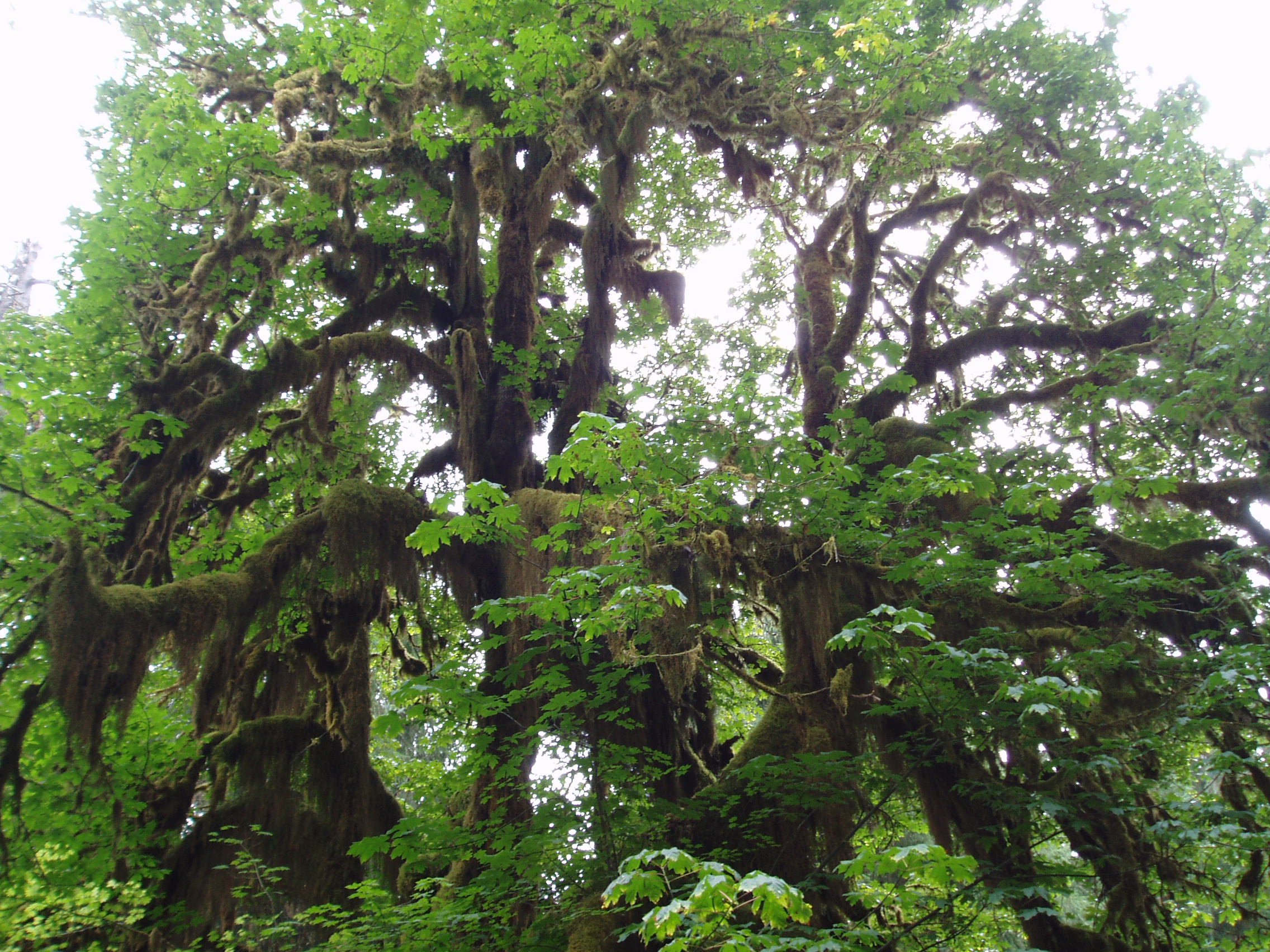

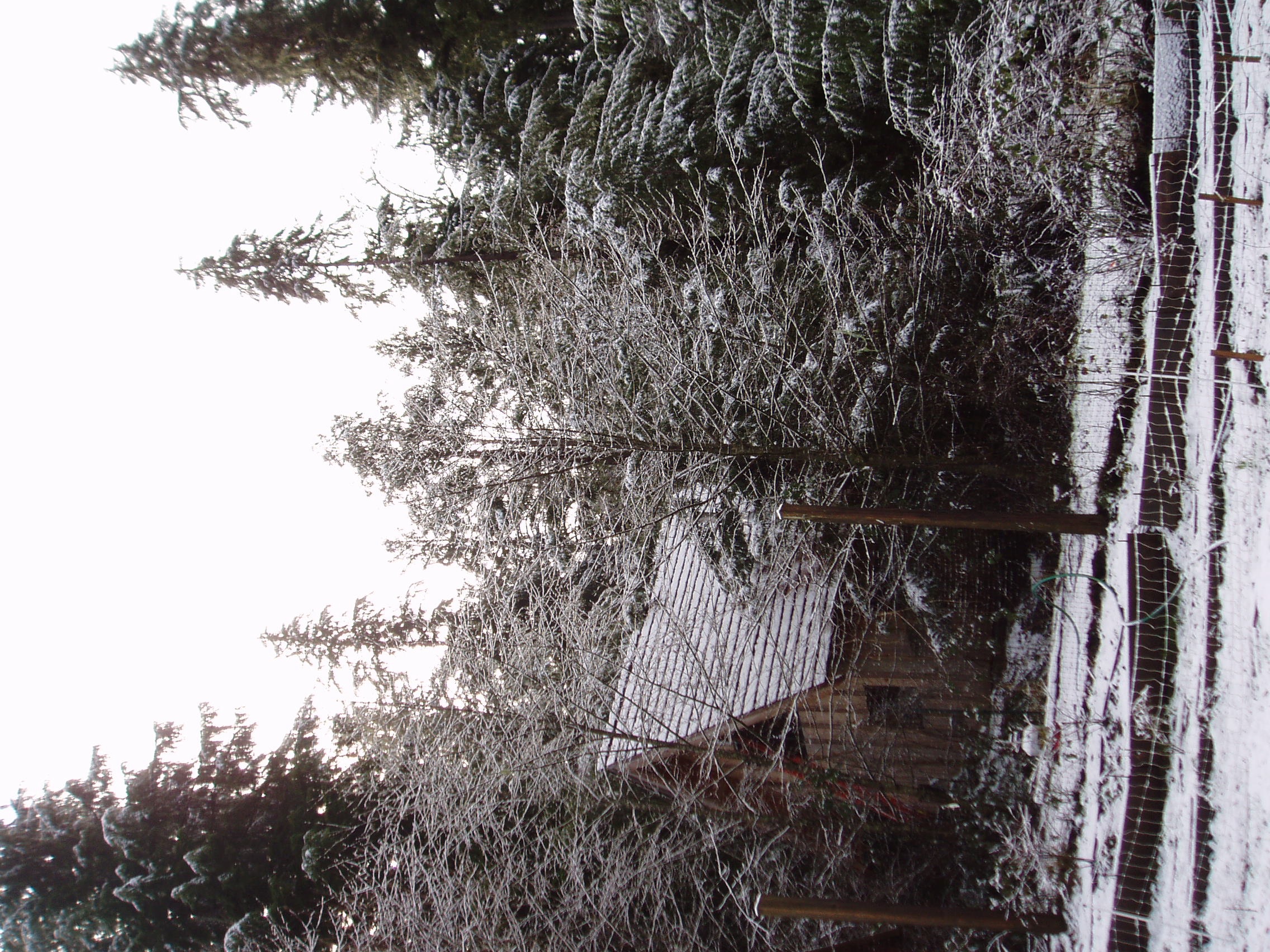


 Of The Hands