Archive for the ‘pictures’ Tag
This week, I took a few days to go into Portland to see family and friends, run errands, and revel in the warmest days of the year. Spring in Portland is a particularly wonderful experience. There’s little that’s better than wandering around pleasant Portland streets while the sun is bright and the sky clear and blue, providing for at least one day the warm and sunny spring I so desperately hope we get this year.
Due to my trip into Portland, though, and four hours of cleaning today as I prepare to move from my yurt to the farm down the street, I haven’t had much chance to write a new post. I feel bad that it’s been so long, so here are a couple pictures to help tide you all over until the next real entry, which will hopefully arrive Sunday night. In celebration of spring, I’m going green for these photos.

Cutting arugula in the hoop house last summer. I used to hate cutting greens, but I've long since come to really enjoy it. Arugula is one of my favorites.
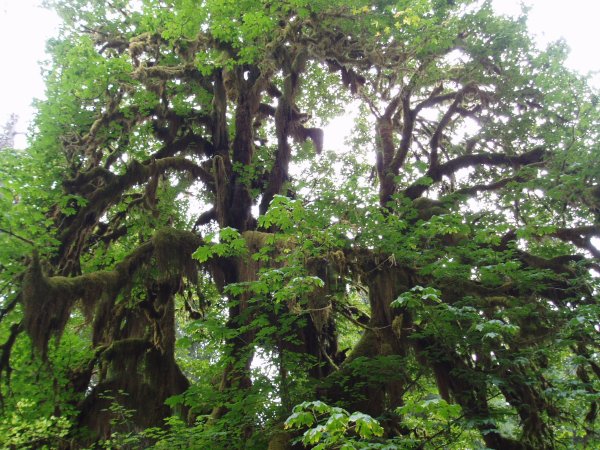
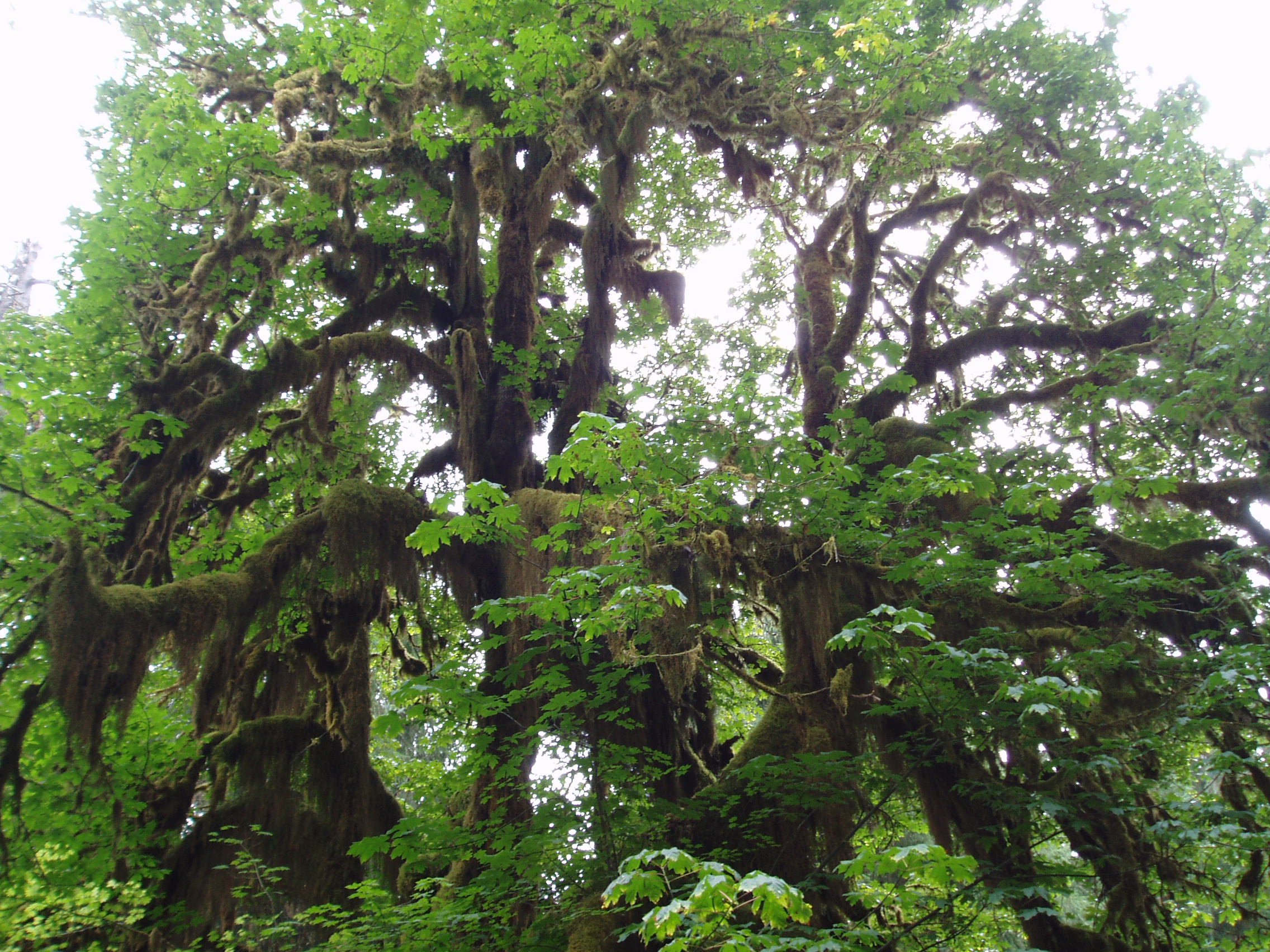
This is from a 2003 trip to the Hoh Rain Forest on Washington state's Olympic Peninsula. The tree would seem to be some kind of maple—perhaps a Big Leaf? Sadly, my tree identification skills are not nearly as good as they should be. I labeled it as a spider tree when I took the picture, and I love the draping moss. The Hoh Rain Forest is insanely beautiful and highly recommended, if you ever get a chance to go.

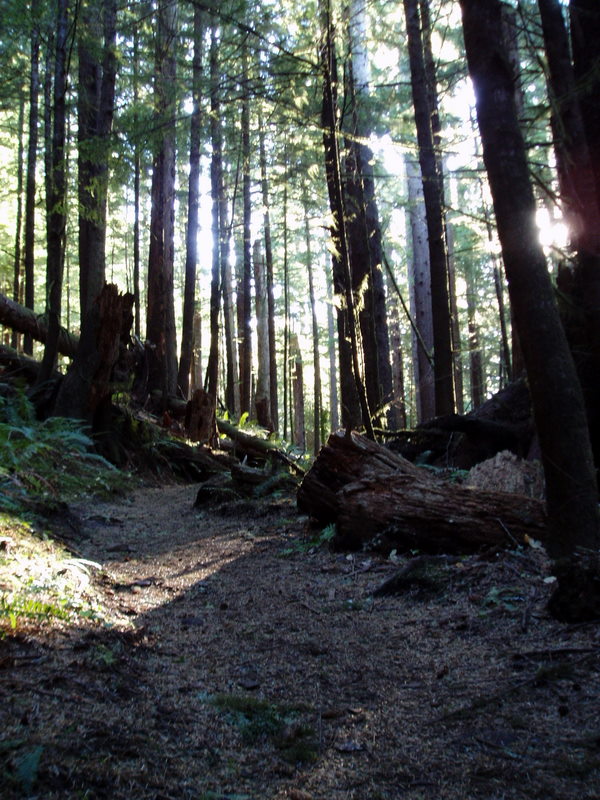
This is a stretch of the Pacific Crest Trail, coming out of Panther Creek in Washington, and one of my very favorite hikes. In fact, it's where I first went hiking—with my father, during a camping trip. I owe him for showing me this glorious bit of the PCT and instilling in me a love of hiking that's served me well throughout the years. There's probably no trail I've hiked more often than this one. I know it intimately and I'll always love it.
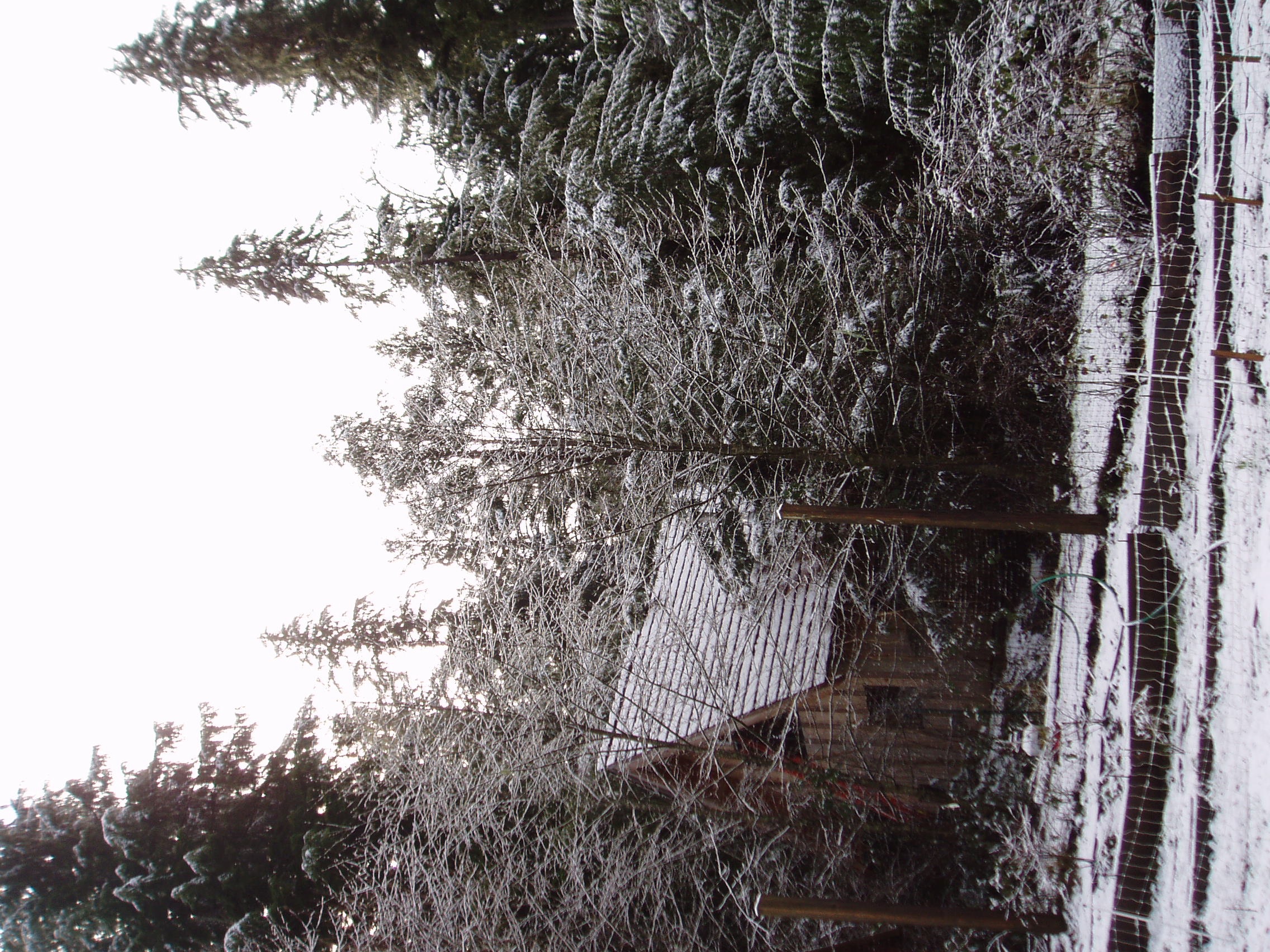
This morning I woke up to the farm covered in maybe half an inch of crunchy, icy snow. It provided just enough blanketing white to turn the gardens and the surrounding forest into a winter wonderland. We rarely get snow here, but when it does fall this is one of the most beautiful places to be. Since I recently stumbled upon my camera’s lost battery charger, I figured I would fire up the camera and take a few pictures. It’s been a long time since I posted any photos here on the blog.
I also am hoping to get a post proper up later today, or perhaps tomorrow. I should have enough free time to get something written. Now on to the pictures.

Brian's Japanese house tucked in the snow-covered trees, with the chicken run in the foreground. The house is really a beautiful, amazing home.

Blue sky peeking through the clouds, above the snow-covered trees. In the foreground are some snowy beds. This side of the farm, however, is going to be put into perennials this year.

My little yurt, otherwise known as home. I love living here. It's about 12 feet diameter and nestled in the second section of the farm's upper gardens. Sadly, I'll be moving on in a few weeks. It'll be pretty easy packing, at least.
One of the more impressive and fascinating aspects of living here at R-evolution Gardens is watching the ways in which Brian and Ginger ingeniously piece this farm together, crafting a place of beauty, function, comfort and humanity while working on a budget somewhere between tight and nonexistent. Using permaculture-inspired design, thoughtful creativity, and thrift, they consistently work within the context of this land and climate. As such, the farm exists off the grid, with all our electricity being generated on site via solar PV panels and a micro hydro generator. Hot water comes from passive solar in the summer and waste heat from the wood stove in the winter. The wood stoves also provide heat and—in conjunction with a hot plate running off the on-site electricity and the occasional use of the outdoor cob oven and a rocket stove—cooking. The farm uses no propane and the wood for the stoves is cobbled together from multiple sources—this year, half came from off the land and the other half was salvaged from a downed tree in a nearby bay, prepped and then kayaked in to an accessible location during a high tide. In other words, Brian and Ginger have created a farm that works with the land and local energy flows, crafting a comfortable living space using a building and design model that’s much more sustainable than the typical one.

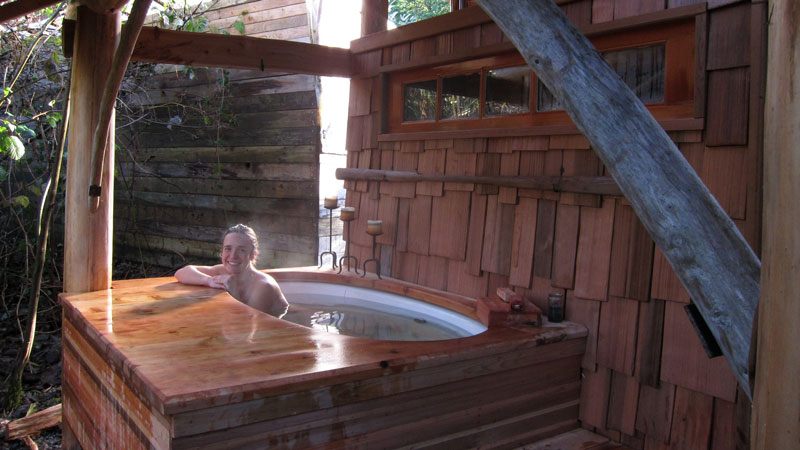
The key component of the bath house---the soaking tub. Photo courtesy of Brian, with many thanks to Leann for modeling.
While the farm is a constant collaboration between Brian, Ginger and a continuous flow of interns, WWOOFers, volunteers, friends and neighbors, Brian is the point person when it comes to building the farm’s structures and alternative energy systems. Incredibly, he does this having self-taught himself the ability to design, craft and install these systems over the last few years. His is a certain kind of energetic genius that can be a mixture of inspiring, confusing and dumbfounding to watch—but which always seems to lead to beautiful and effective structures. He calls his methods “farmitechture,” but I would simply call it appropriate (though I love his term.) He works within the land, on a budget, and he creates buildings that fit their surroundings and are built as much as possible from salvaged and local materials.
In that vein, the most recent addition to the farm is a Japanese-inspired bath house, powered by sun and wood. Brian built it over the course of this summer with a bit of help from a friend, a couple WWOOFers, Ginger and a few brief assists from me. A significant portion of the bath house is made out of salvaged and recycled materials: blown down cedar poles from a friend’s property, a downed cedar from the bay, beautiful 3x3s found washed up on the beach, old solar hot water panels from the 70s found at the dump, a soaking tub bought at a recycling center. The building fits into the land, looking like it belongs there. The hot water for the tub can be heated by the sun in the summer, by burning wood in the winter, or by a combination of the two during the shoulder seasons.
There are clever touches, such as the electric water pump that circulates the water through the solar hot water panels. While Brian’s preferred method of rigging a solar hot water system is to entirely use natural thermal siphoning (that’s how the system in the main house is rigged) that design wasn’t feasible for the bath house. So instead, the water pump is wired into a small PV panel, so as soon as the sun hits it, the pump starts up. This works perfectly, as the water only needs to be circulating through the solar hot water panels if the sun is shining on them. In another nice touch, the Chofu wood stove resides in a small room which takes up half of the bath house space. The waste heat from the Chofu is thus captured in this room, quickly warming the room to about 90 degrees in the winter. While it’s not sauna-level heat, it does provide a nice, warm space to rest in if desired. It also provides a heated dressing room.

A look at the bath house from the outside, showing off the two solar hot water panels and the solar PV powering the pump. Photo courtesy of Brian.
Of course, the draw of the bath house is not just it’s inspiring and appropriate design, but the actual comfort and relaxation it provides in the form of hot baths. A night of hot tubs has become quite the common occurrence here on the farm and the pleasure it provides is something of a revelation. Hot water does amazing things to tight and sore muscles, and the experience of soaking while exposed to the cool night air is a lesson in juxtaposition, creating a pleasant discord that only serves to heighten the sense of comfort. Furthermore, there’s a certain luxury to the bath house the effect of which is hard to overstate. It’s a luxury that isn’t always a part of this off the grid lifestyle, no matter how much I do love this lifestyle. The fact that it’s been instituted in a fairly sustainable and thrifty way is a small revelation. It’s a push back against the idea that living sustainably necessarily equals living uncomfortably. It doesn’t. While this lifestyle may not provide the sort of hermetic seal that a life on the grid can and often does, it provides something much more: connection, purpose, a life that feels humane, a sense of care and respect—and now, a significant bit of luxury to go along with all of that. That’s something to be noted and documented.
And it has been documented. Not just here, in this post, but in greater detail and with significantly more pictures at Brian’s website. I urge you to check out that link for the story of the bath house’s building in Brian’s own words and a much more detailed break down of how he built it, what materials went into it, and the philosophy behind his design. A structure as beautiful and generous as his is all too much a rarity in this mass-produced world, so I encourage all to read about what he did and use it as inspiration and as proof of what can be done in this world, even within a low-energy framework.
I’ve been buoyed of late by the Occupy movement. Having joined the kick off march and rally for Occupy Portland, participated in the October 15th global day of protest, and closely followed OWS for months, I saw the movement as the first real possibility in my lifetime of enacting broad social, political and economic change. As a proponent of such change–of radical change–I dared to hope that this may be the beginning of the long sought revolution, unveiling itself before my very eyes, in my lifetime, at what seemed a critical moment of history. I have, in recent years, danced around the sense that a reckoning is coming–an apocalypse of some kind, the collapse of industrial civilization–and I have wanted to see a revolution to help head off that collapse, or at least to try to work within its confines rather than fight it to the bitter end, inevitably to the still-further impoverishment of all.
Occupy slotted itself very nicely into the space in which those dreams resided. There was an intoxicating power to the way it grew and flourished, drawing in thousands and spreading across the globe, linking up with other protests, movements and revolutions, and commanding the attention of political and economic elites. This, finally, seemed to be history unfolding. It was happening.
But then, within the same time frame, I began to question my dreams of apocalypse. Much of this questioning came out of a series of posts written by John Michael Greer over at The Archdruid Report. In writing about magic and thaumaturgy, he brings to account the sort of binary thinking that drives such apocalyptic thinking, as well as its utopian sibling. Greer argues that humans have a tendency toward binary thinking, seeing “polarized relationships between one thing and another, in which the two things are seen as total opposites.” He believes, due to its frequency, that this is “likely hardwired into our brains” and that it stems from “the snap decisions our primate ancestors had to make on the African savannah,” sorting things into “food/nonfood, predator/nonpredator, and so on.” Today, we have the ability to go beyond such binary thinking into more complex thought processes, but a proper amount of stress can trigger our more primitive mind frame, pushing us back into binaries.
The tendency to project our timeline out into apocalyptic or utopian fantasies, then, stems from that binary thinking. Some see history moving us toward an ever-more-perfect society while still others believe that we are heading for a complete collapse–the end of civilization or, more colloquially, the zombie apocalypse. I’ve tended toward this latter mind frame, spurred on by signs of ecological catastrophe, a rapidly changing climate, the plateauing of oil production and the exhaustion of physical resources. And I do still think that we’re in for a reckoning on a global scale. Yet the idea that it’s going to collapse all at once, in some kind of fiery apocalypse–or more specifically, in some kind of sudden and complete withdrawal of governmental authority, industrial economic activity and legal and social structures–no longer holds as much sway with me.
My new found hesitancy to embrace such a concept stems, again, from recently-read writings of Greer’s. He notes that past civilizations that have collapsed have all followed a similar model, though the details of course vary wildly. However, the similarity tends to manifest itself, in Greer’s words, as a “stairstep sequence of decline that’s traced by the history of so many declining civilizations—half a century of crisis and disintegration, say, followed by several decades of relative stability and partial recovery, and then a return to crisis; rinse and repeat, and you’ve got the process that turned the Forum of imperial Rome into an early medieval sheep pasture.” Furthermore, in his book The Ecotechnic Future, Greer argues for a long perspective view of societies that casts them in evolutionary terms, with our current industrial civilization being, essentially, a less-evolved mutation of a technic society. In his frame, our use of technology was the evolutionary leap and our current use of it is just one early and not particularly resilient manifestation of that leap. As we deplete the fossil fuels and other physical resources that power our current evolutionary branch of society, we’ll be forced into new branchings. However, he foresees (far) future societies likely still using technology, just in more appropriate and sustainable manners.

Looking out on Cape Falcon from the beginning of the trail.
These new-to-me perspectives–of stairstep collapse and an evolutionary model overlaid on our society–has evolved my own thinking about what our future may entail. While, as I mentioned above, I still see that reckoning on its way, I see it less likely as playing out in complete and catastrophic collapse. Rather, I’m swayed by Greer’s argument that we’ll see more of a stairstep collapse and future transitional phases–though they’ll likely be trying affairs, to say the least. This shift in perspective on collapse, meanwhile, has also shifted my perspective on the Occupy movement. Simply put, I no longer think it can or will lead to the revolution I previously hoped for. More specifically, I don’t think that revolution is even possible.
If we are heading for a stairstep collapse rooted more in the increasing scarcity of fossil fuels and their incredibly-concentrated sources of energy, as well as the inability of America to continue to control a share of the world’s resources far beyond its population share, then we are facing a future with no grand solution. Our course is untenable; there’s no solution to make it tenable. If there’s no grand solution, then there’s no revolutionary moment that can save us from collapse, from a series of harsh changes that we don’t want to and are unprepared to make. There are only small moments of adjustment. There are only high levels of persistence. There is only a long process of muddling through, of taking the next step not in accordance with a long-established plan, but with a deft adjustment to recently-arisen circumstances. There is only a series of moves made in conjunction with local realities, not one grand saving grace rooted in a globalized reality. There is only you, and your family, your household and your neighbor’s, the small community around you, a watershed, a localized climate and geography that is asserting itself every day as a greater and greater percentage of your total reality. That’s the only solution, and there’s nothing particularly grand about it.
My experiences with the Occupy movement have been intoxicating. They’ve been empowering. And I don’t think there’s anything surprising or unique about this. In the context of a political and economic system that has rendered the vast majority of people powerless, that voice and sense of impact that the Occupy movement has provided can be addicting. Finally, we think, politicians are responding! Finally, the media is acknowledging us, even if it’s half the time an acknowledgement made up of nothing more than spite and degradation. The Occupy movement isn’t an online petition destined to be ignored. Nor is it dispiriting, as such petitions tend to be. It, rather, engages you in a way that such easy actions do not. Instead of clicking mindlessly, you come together with like minded people and you voice your displeasure, your anger, your frustration and outrage. My experience with that was addictive–I wanted more of it! Based on the growth of OWS, I don’t think my reaction was an isolated one.
Yet, Greer once again wrote something that impacted the way I thought about this reaction. In an essay entitled “A Choice of Contemplations,” Greer writes that “The vast majority of Americans these days believe that something has gone very wrong with their country, but there’s nothing like a national consensus about what has gone wrong, much less how to fix it. By chance or design, the Occupy movement has capitalized on this by refusing to be pinned down to specific demands or specific critiques, mounting a protest in which protest itself is the central content. Tactically speaking, this is brilliant; it’s created a movement that anyone with a grievance can join.”

A particularly beautiful and calming spot along the trail.
This rings true to me. Since the inception of the movement, I’ve been sympathetic to people who have called for specific demands, but unconvinced. Ultimately, I thought the lack of demands lent the movement a great strength. As soon as demands were introduced, they could be used to split apart the movement, to discredit it, and could become a flash point for a full-fledged attack from the movement’s enemies. All of which, I think, is true. Yet the part I wasn’t seeing as clearly was what Greer wrote. The lack of demands opens the movement to anyone who’s angry, which is damn near everyone. Not all will join, but the potential is there. In that sense, the movement was primed for growth. It seems not a coincidence, then, that it grew very fast from its inception.
But I can’t help but think there’s something more we’re facing here. Yes, we have an exploitative and brutal economic order and a corrupt and ineffective political class. Yes, we have a co-opted and bankrupt media and decaying national infrastructure. Yes, we have a societal and cultural order that is propped up by the underpinnings of domination and brutalization. And God yes, we need movements against these unfair and destructive aspects of our society. But what do we do when these movements get caught up in the same system? It’s a common refrain from the Occupy movement (though by no means a consensus) that we need to rebuild the middle class and create a fair economy that provides everyone an honest opportunity for a well paying job with benefits. But let’s be honest for a moment here. The middle class America that most of us envision when we talk about this is bullshit.
It is, I’ll say it again, bullshit.
This is a class built on the exploitation of the rest of the planet: many of its human occupants as well as all its non-human occupants and damn near everything else found in the earth’s ecosystem. The American way of life consumes vastly more resources on this planet than it has population–and the planet is overpopulated. We’ve been living in a fantasy land of the exploitation of concentrated-energy fossil fuels and the destruction and waste of the planet’s physical resources, and we built multiple classes on that exploitation and waste. One of those is the middle class. It’s not as wasteful and as unsustainable as the upper class here in America, but it sure as hell isn’t sustainable, either.
I don’t see a future in which we don’t have to deal with dramatically lower wealth and standards of living. This doesn’t mean we all have to be miserable, dead or living in squalor–though I will be surprised if we get through this tumultuous next few decades without our share of chaos and suffering–but we sure as hell aren’t going to have processed foods and microwaves, TV and the internet, video games and 401k and guaranteed retirements, a country in which a tiny fraction of the population farms, massive tractors and automobiles and development strategies powered by oil, or an endless supply of cheap technological gadgets to distract us from our ever-more meaningless lives. We’re going to have to reacquaint ourselves with limits and physical realities and the necessity to live with the sustainable levels of energy and resources provided by the planet’s ecosystem. The analogy is simple and has been used numerous times: we’ve run up the credit card bill and now we’re going to have to pay it off–while simultaneously learning how to live without the extra purchasing power of that credit.
The model going forward is impossible to predict in its exact details, though one could sketch some likely outlines. One reality that seems undeniable, though, is that we’re going to move away from globalization and return to localities. In fact, we’re looking at a hyper-localized future, in which we’re going to have to reacquaint ourselves with the idea of making our living from a particular piece of land, rather than just existing on a piece of land that means nothing to us while we import our existence in from the globalized, industrial economy. This is huge. It’s going to be hard and it’s going to be made harder by the fact that, over the last couple generations, we’ve discarded an incredible amount of the knowledge needed to live in such a manner. We’re going to have to resurrect as much of that knowledge that still exists, create new knowledge through lengthy trial and error, and train incredible numbers of people in these forgotten skills. And we’re going to have to do it within a compressed time frame–much quicker than such a process would play out naturally.

A stray root from this tree forms what looks like a little hobbit house door.
Over the last month or so, as these ideas have been percolating and coalescing in the back of my mind–spurred on by a variety of Greer’s writings and my own knowledge base and lifestyle–I’ve been struggling to figure out what I think now about the Occupy movement and my place in it. And while I haven’t come to a firm conclusion, I did come to one particular course of action on December 12th. On that day, I had originally planned to travel to Portland from the Oregon coast, where I’m living on a farm, and join in on the attempt to shut down the Port of Portland. As the Occupy encampments had been broken up by authorities and massive displays of force had successfully pushed the movement into a new and quieter phase, I felt the urge to join in on striking back and making clear to the authorities that the movement was not defeated–that it had not been broken under their violent repression. But as the day grew closer on the calendar, my motivations changed. The more I thought about leaving the farm to drive again into Portland, the more I wanted to stay. The more I thought about shutting down the port, the more I wanted to connect to my local landscape.
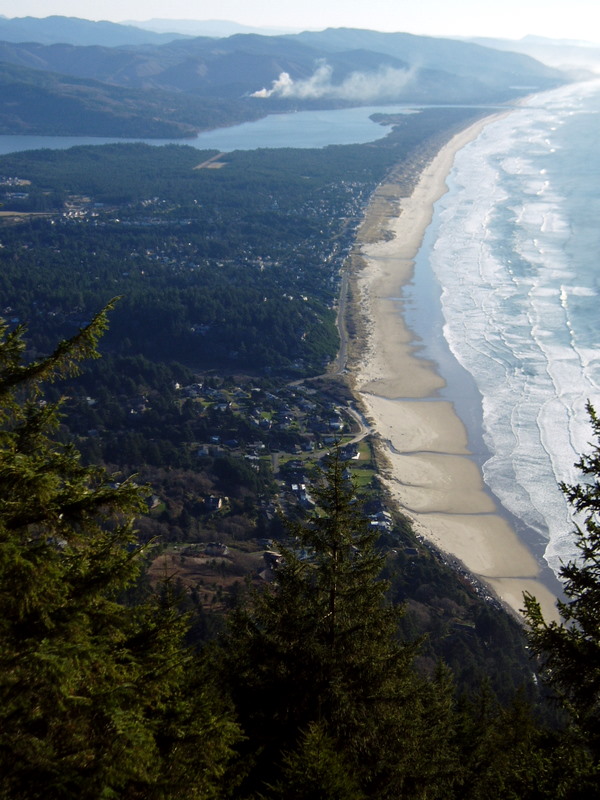
Therefore, I chose to hike on December 12th. I hiked up Neahkahnie Mountain, which is not the particular land I live on, but is a prominent element of the local geography. It was not a long hike–about four miles round trip, up to the top of the mountain from a midway point and back down to that point. It was a beautiful hike on a glorious day, the sky blue and the sun shining and everything simply far nicer than it typically would be on a mid-December day along the Oregon coast. The air was chilly, but it was no match for the body heat worked up by the physical exertion. I hiked, I observed, I experienced, I worked my body and touched the trees and stood multiple times in awe of the beautiful world around me. I felt calm and relaxed and my mind slowed but became sharper, more perceptive. This, then, was a different kind of exhilaration than the protest and port shutdown would have offered. It was something that struck me as more holistic, more calming . . . more grounding. It was a connection to my local landscape, and it was critical.
If we’re to live in a future with limited access to fossil fuels and the need to live at a truly local level, then we are going to have to rediscover the places we live. We will need to study them, observe them, become intimate and familiar with them. We will need to do our best to understand them, love them, forgive them the challenges they provide us and embrace their peculiarities. This is not a quick process. It is, in fact a lifelong process–a process ideally suited to multiple lives, even. In an ideal reality, culture would provide us the capability of understanding the land over multiple lifetimes in the form of the knowledge passed down to us from previous generations, living on the same land we came to live on. The reality today is far different. Very, very few of us have such a connection. Many of us are nomads.
The port–in its current form, at least–will not last my lifetime. Perhaps my certainty is hubris, yet that certainty remains within me. The land I live on now and in the future (which will hopefully be approximately the same) will be there throughout my lifetime and beyond. And at some point during this life of mine, I will be necessarily more tied to it than I am today. If I want to secure my future, then, and to make that future better, than I best learn the lay of that land. And every day I jet off somewhere else is another day I’m behind in that process. Similarly, every day I exist on this land but spend the day on my computer rather than out on it is another day I’m behind in that process. (Hello, today!) I need to make these days count, and on December 12th I believe I made my day count.
I don’t begrudge the Occupy movement. Rather, in many ways, I cheer it on. We need the activism. We need protest. We need people who are willing to do whatever they can to try to stop this machine as it murders our fellow creatures, human or otherwise. But I also think we have to keep a steady focus on a future beyond that machine. It’s coming down, the machine–that’s inevitable. It’s fuel is running out and its structural integrity is degrading. What replaces it is a question of high importance and whatever the answer is, it’s going to be rooted in a future reality that is smaller and more local and far more connected to the landbase and the ecological sphere within which each individual exists.
I ask people not to lose sight of that. Protest, yes, absolutely, but don’t become too addicted to the intoxicating sense of power and voice. There is a smaller, quieter, but I would argue greater power in learning your land, connecting to the creatures of this world, and figuring out how to live and work well in this world. That is the ultimate struggle of our time. The machine we attempt to stop is simply the result of our failure to do this good work. We have to figure out our own lives and how to live them better–how to live them as properly as we possibly can–if we are to craft a future better than that machine. Otherwise, when it comes to a coughing halt, devoid of fuel and falling to pieces, all of us who spent our time only fighting will no longer have an existence. We’ll be lost, and in that loss will only be chaos–the vacuum where a meaningful and connected life should be, where our new culture is searching for purchase, for the nourishing soil within which it will grow.

The view from the top of Neahkahnie Mountain, looking out over Manzanita, Nehalem and beyond.
One of the particular joys of farming at R-evolution Gardens this season has been the chance to meet so many amazing people throughout the course of the year. Ginger decided that for the 2011 season, she was going to start bringing WWOOFers onto the farm to help out with the expanded operation. Rather than it being just her and an intern, like it was in 2010, it was this year going to be her, two part-time interns (Emily and myself) and somewhere in the vicinity of 50 WWOOFers.
In other words, a bit of a jump in personnel.

My fellow intern Emily, me, farmer Ginger and two-time WWOOFer and movie night-instigator, Erin.
Of course, the 50 WWOOFs didn’t all arrive at once. They were spread out over the season, arriving for stays of two weeks or less, with usually two or three being on the farm at any one time. Yet, it still was a certain kind of madness having the constant influx of new faces and helping hands. At the same time, it was a certain kind of lovely to meet so many incredible and heartfelt people, all of them interested in growing food and living more sustainably, their excitement and enthusiasm a constant lift.
While this year was my third farming experience, it was my first one with WWOOFers. And I liked it. No, actually, I loved it. Having these people cycling through provided uncountable moments of friendship and good conversation, work and play, new perspectives and unique bits of wisdom. It’s a special person who decides to go live in a tent for a few weeks on a farm and trade their physical labor for food. It’s the sort of person who has moved herself to an honest questioning of our society’s functioning. It’s the sort of person who seeks good work, good food and good community. It seems to be the sort of person who tells good jokes and asks good questions and makes smart observations and enjoys a good sweat, either from labor or a sauna or both. My kind of people, then, and I’m lucky to have met every one of them.
There are memories galore. From chopping wood and exchanging books with Matt–who walked away from our farm with a new tattoo inspired by this place, as well as the intention to return next year–to the ginger ale-making session with Cori, Sarah and Kyle. From cob-oven pizzas made with a multitude of different WWOOFers to long conversations with Erik about Derrick Jensen and farming and future plans. From the late-night summer bonfires with strumming music to the burrito adventure with Skyra and Erin. From wood hauling with Casey, Sarah and Karen (so appreciated right now as that wood burns and pushes back this winter’s day chill) to listening to the easy conversation between Matt and Kaiti next to a bonfire on the beach, to sitting by the river on a hot day with Jed, Alex and Erin, to talks of dating in Portland with Christine. From so many amazing meals made by Kate, to Matt and Minjie bringing a bit of Chinese culture to the farm, rocking the authentic fried rice and talking mooncakes, to the always-amazing Leigh-Ann and Jena initiating us into this crazy WWOOFer adventure via their hauling and spreading of gravel and their getting covered with chicken shit (a rite of passage!) Not to mention, Leigh-Ann’s continuing friendship when she moved to Cannon Beach, providing me some wonderful evenings of beer and good conversation up north. From Glen’s thoughtful conversation, steady presence and smart insights to Erik’s fantastic handwritten instructions for growing mushrooms to Aaron’s calming presence and hard work. From a night of music and burnt cookies with Laura, Sky and Rob to conversations about basketball with BJ. From Julie and Kevin’s dangerous over-consumption of Rooster sauce to Kevin’s drunken nudity (oh, tequila!) to Tiffany and Michael’s enthusiasm for weeding and faux-theft of M (see the adorable picture at the bottom of this post.) From our wonderful overlapping of two different Nicks, to Ally’s listening skills on our drive to Tillamook (sorry for the babbling.) From the steady hands and farm free-styling of Marguerite and Alex to Rachael’s cob-oven cobbler and condemnation of this coffee-connoisseur’s caffeine over-consumption. (That’s how you do alliteration!) From conversations about Buffy with Piper to conversations with James about how to make a little money with this lifestyle. From going in to Portland to see music with Liza and Sean and snagging ourselves some free fries to the odd relaxation of our final WWOOFers, Nicky and Darci, who showed up after the markets were done and the CSA appreciation dinner over and with everything finally having eased down from the utter craziness and stress of late summer. It was nice to have that last couple WWOOFers to be more relaxed with and to have a sense of cyclic-closure, as they represented some kind of approximation of experience to the rainy, more-relaxed first WWOOFer experience with Jena and Leigh-Ann.
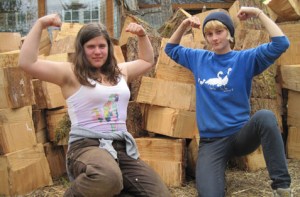
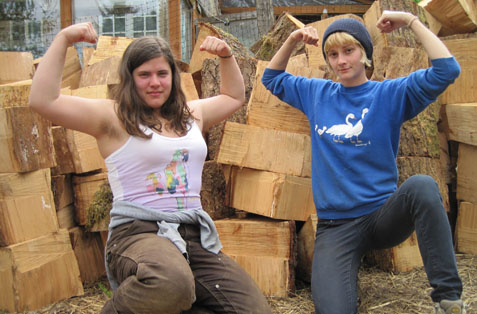
Casey and Sarah, flexing those muscles after an exhausting day of non-stop wood hauling and heaving. An extra thanks to them as I burn that same wood now to keep warm.
All these WWOOFers provided not only their perspectives and work and friendship and energy, but they provided an extraordinary social scene in a somewhat remote setting. While we have a town of great people nearby, that town isn’t huge and the farm is still about nine miles from it. With my past farming experiences, I’ve often found myself feeling isolated to the degree that I have to somewhat crazily head out on a semi-regular basis to a local coffee shop or bar or both just to hang out and be in the presence of other people–even if I’m not actually interacting with those people. This takes a bit of a financial toll when you’re pursuing a life that provides little to no money, so having the WWOOFers here this year really helped with that. I very rarely felt the need to leave the farm to fulfill some social longing. If anything, I was anti-social at times, needing a break from the constant interactions, and I apologize to those WWOOFers who hit the farm during those anti-social periods of mine. Sometimes I can’t help but just want to hunker down in my yurt with a good book and my own thoughts.
In celebration of all these kind souls who helped us work, play and grow food this year, Ginger has put up a more comprehensive WWOOFer retrospective on the farm’s website. I encourage all to check it out. It’s highly entertaining, with photos of most of our visitors, some thoughts from Ginger and quotes from the parting notes everyone left in the WWOOFer book at the end of their stay. You’ll even see a few pictures of me scattered throughout that post. We really were blessed to have so many incredible people work with us this year. A huge thank you to all of them–you really made this year happen, in so many different ways.
A new essay should be up within the next day or two. In the meantime, here are a couple colorful photos from the farm.

A few days ago, I noticed this cartoonish but beautiful mushroom growing halfway down the driveway. My mushroom identification skills are more or less nonexistent (and need to become existent in the near future) so I have no idea what kind it is. I'm going to go ahead and assume it's non-edible and extremely poisonous, just based on appearances. If I'm wrong, I'd rather it stay anyway as a lovely element of the land rather than a meal.
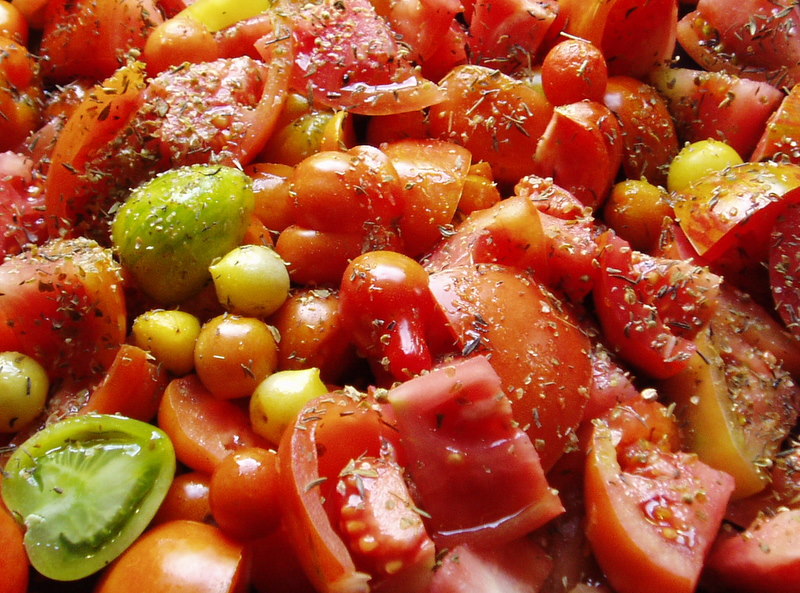
We cleared the tomato plants of their green tomatoes a few weeks back in anticipation of the winter weather. They're now inside and as they ripen up, we've been chopping them, drizzling them with olive oil, sprinkling on some herbs and then roasting them to then be frozen and available throughout the next year for a variety of culinary uses.
That’s right, Of The Hands has returned from its (my) self-imposed hiatus. The farming season has wound down, the CSA is finished, the cold and rain have set in and winter looms large. I suddenly have a whole lot of free time and plan to use it to get back into the writing. I also have been using it to get back into the cooking (not that it ever really stopped.) Last night, I made a lamb stew and tonight I dived into some good, old-fashioned pizza making. Tomorrow I’ll have a real post for you. Tonight, you’ll have to do with some dinner pictures.

Winter squash sauce with caramelized onions, chanterelles, roasted garlic, goat cheese and sage.

Roasted tomatoes, pesto, some stray caramelized onions and chanterelles, goat cheese, parmesan and romano.
Tonight we’re making chicken soup with the bones of two raised-and-slaughtered-on-the-farm chickens that we cooked up over an open fire last night. The soup’s being cooked on our rocket stove, which was made here on the farm utilizing clay from the land.
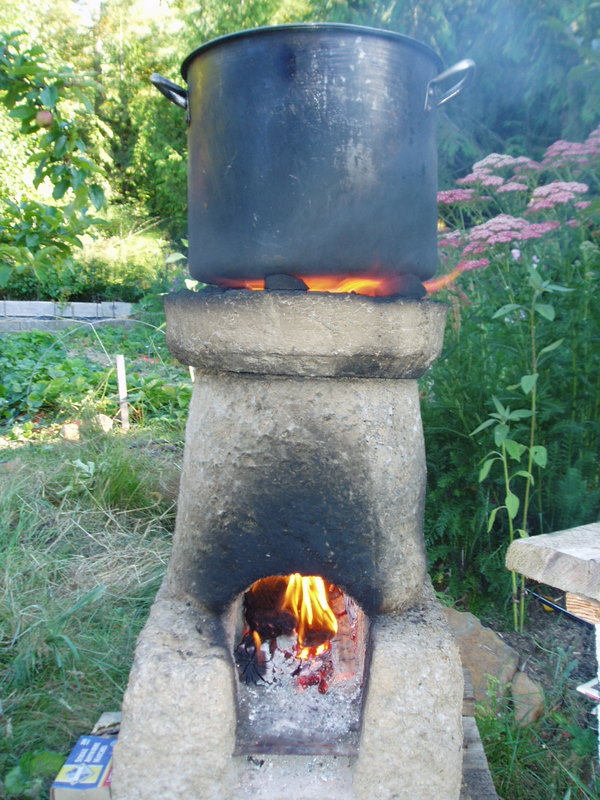
Cooking off-the-grid style, using a rocket stove made with clay from the land and burning pieces of scrap wood from around our wood shed. Chicken soup is indeed good for the soul.
Yesterday, after we harvested for the market, I headed out to the coast for a relaxing afternoon of food, beer, reading and writing. I went to a particularly treasured spot and thought I would share a couple pictures.
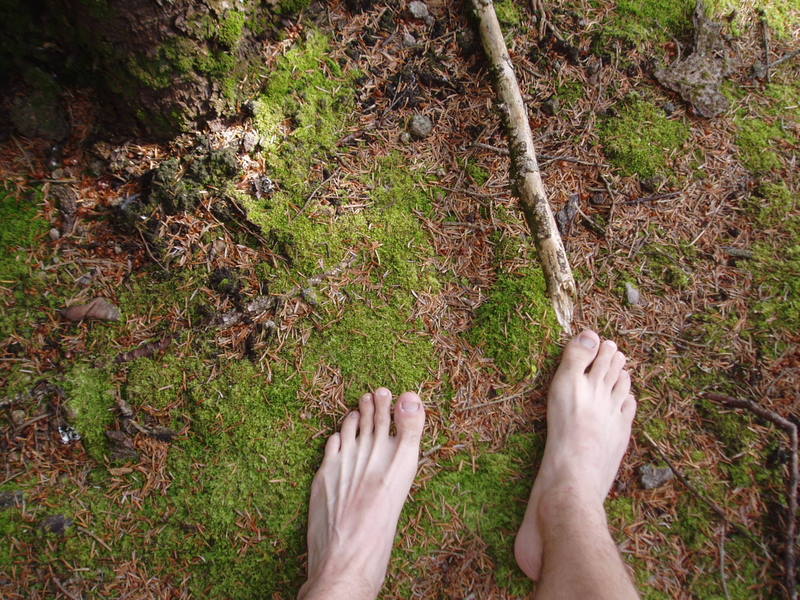
The moss felt so soft.

Looking up the hill from where I stood barefoot.

Looking toward Cape Falcon.

A favorite hang out spot for gulls and other birds.

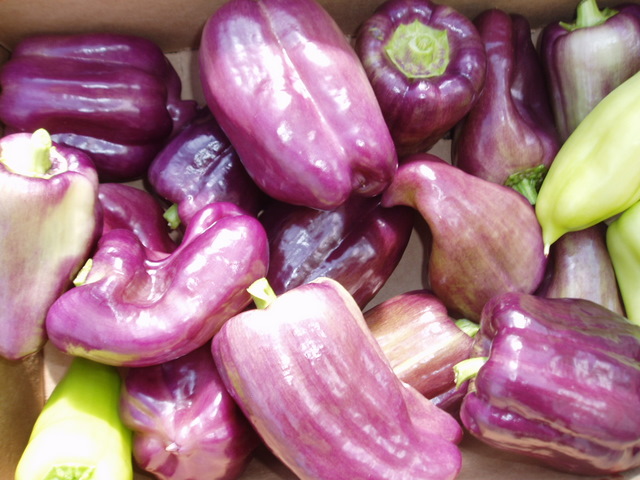
Purple peppers are just cooler.
Yesterday, Brian told me to watch the moon that night. Its track across the night sky would be a preview of the sun’s track during the winter. The moon would show me how little sunlight we would have.
And indeed, the moon’s track was low on the horizon that night, skimming along just below the tops of the trees upon the ridgeline on the southern side of the property. Shafts of moonlight would occasionally flood the farm as the moon slid into an open space between two trees, but it would soon disappear again. The overall message was clear: those trees, while quite effective in shielding the farm from wind during storms, are also effective in shielding the farm from sunlight in the winter. It’s going to be a dark winter.
This understanding serves to make me appreciate the farm’s current abundance even more. As I wrote a few days ago, the sun provides the farm with an incredible amount of wealth: food, energy, warmth, pleasure. It transforms the land and the life upon it, including us. It helps to provide an almost unimaginable abundance.
Garlic hanging to dry.
We have so much food right now. Nearly every meal seems a ridiculous spread, each day a testament to the current bounty. The farm is now pumping out cucumbers, eggplants, peppers, tomatoes, basil, squash, beans, carrots, beets, and potatoes. Not to mention kale, chard, salad greens, arugula, spinach, head lettuce, garlic, broccoli, cabbage, radishes, parsley, blueberries, and I think there may be a few stray strawberries around, too. The chickens are providing their own abundance in the form of multiple eggs a day. Brian, meanwhile, has been catching Chinook salmon, providing us with incredibly delicious fresh fish. Ginger has been trading at the farmers market, using our incredible veggies to bring home cherries, peaches, raspberries, locally-baked breads and pastries, local milk, blue cheese and grass-fed meat. Before long, we’ll have melons, corn, another round of snap peas, duck eggs, wild blackberries, honey from Ginger’s hives, and a few apples from the still-young orchard.
It’s not just the food, either. The farm is blanketed in beautiful flowers and the growth of everything (including the weeds) has exploded. There are birds everywhere, the cats are playful and energetic, the chickens and ducks are ever-busy, and uncountable wild creatures, bugs and critters abound. Thanks to the sun, we usually have abundant electricity and hot water. And, finally, we find ourselves with a never-ending stream of engaging, thoughtful, hardworking Wwoofers.
While farming is a joy year-round–even when the cultivated food has yet to arrive–it’s particularly satisfying this time of the year. When the incredible abundance arrives and you find yourself with an almost embarassing selection of delicious, fresh, healthy foods to choose from every day, the true glory of being a farmer–of this way of life–makes itself clear. This, here, is one of the many rewards of good work. Not only abundant and delicious food, but the forging of community and the fostering of life, health and happiness. While it may prove a dark winter, the memory of such a bright and sustaining summer will no doubt carry us through.

The summer makes kittens playful and keeps them adorable.












 Of The Hands